Pipeline coverage
A key sales metric that measures the ratio of a team's qualified pipeline value against its revenue quota for a specific period.
Pipeline coverage is a forward-looking metric that measures the value of a sales team's qualified opportunities relative to its revenue quota for a specific period. Expressed as a ratio, such as 3x or 4x, it helps sales leaders and RevOps teams assess the health of the sales pipeline and forecast the likelihood of achieving targets. For example, a 3x coverage ratio means a team has three dollars of qualified pipeline for every one dollar of quota they need to hit.
How Pipeline Coverage is Calculated
The formula for pipeline coverage is:
Pipeline Coverage = Total Value of Qualified Pipeline / Sales Quota
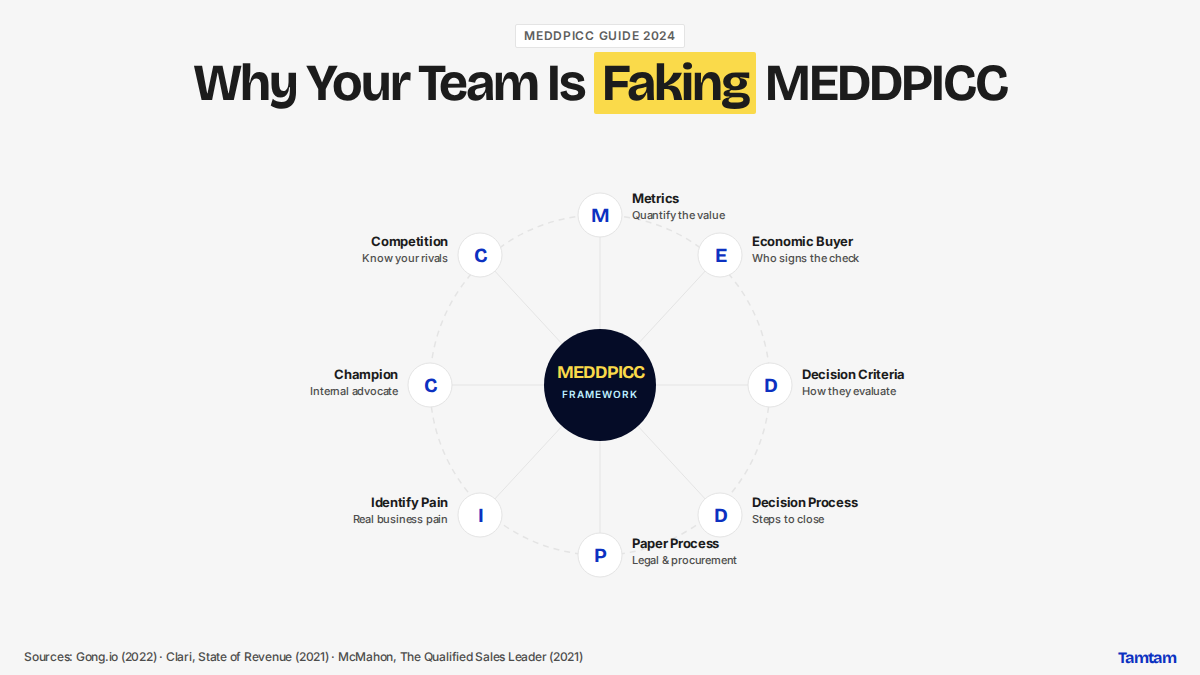
For this calculation to be meaningful, both the pipeline value and the quota must apply to the same timeframe, typically a quarter or a year. The definition of "qualified" is critical and varies between organizations. It often corresponds to a specific stage in the sales process where an opportunity has met predefined criteria, such as those in a framework like BANT or MEDDIC.
Why Pipeline Coverage Matters
Pipeline coverage is a critical leading indicator of future revenue performance. It provides an early warning system for sales organizations.
A low ratio (e.g., less than 3x) signals a high risk of missing quota. It indicates that the team does not have enough opportunities to convert, prompting leadership to invest more in demand generation or outbound prospecting.
Conversely, an excessively high ratio (e.g., 6x or more) is not always positive. It can suggest that deals are stalling, qualification criteria are too loose, or the pipeline contains low-quality opportunities that are unlikely to close.
What Is a Healthy Ratio?
While 3x is a common benchmark, the ideal pipeline coverage ratio depends on a company's specific go-to-market motion and historical performance. Several factors influence the target:
- Win Rate: Teams with lower average win rates require higher coverage to compensate for lost deals.
- Sales Cycle Length: Businesses with long sales cycles need more pipeline coverage at the start of a period to ensure enough deals close on time.
- Deal Velocity: Slower deal progression through the pipeline also necessitates a higher coverage ratio to offset risk.
A revenue operations team is typically responsible for analyzing these metrics to establish a realistic and data-driven coverage target for the business.
Also known as: pipeline coverage ratio, coverage ratio