Revenue architecture
Revenue architecture is the strategic design of a company's end-to-end system for generating predictable growth, aligning teams, processes, and technology.
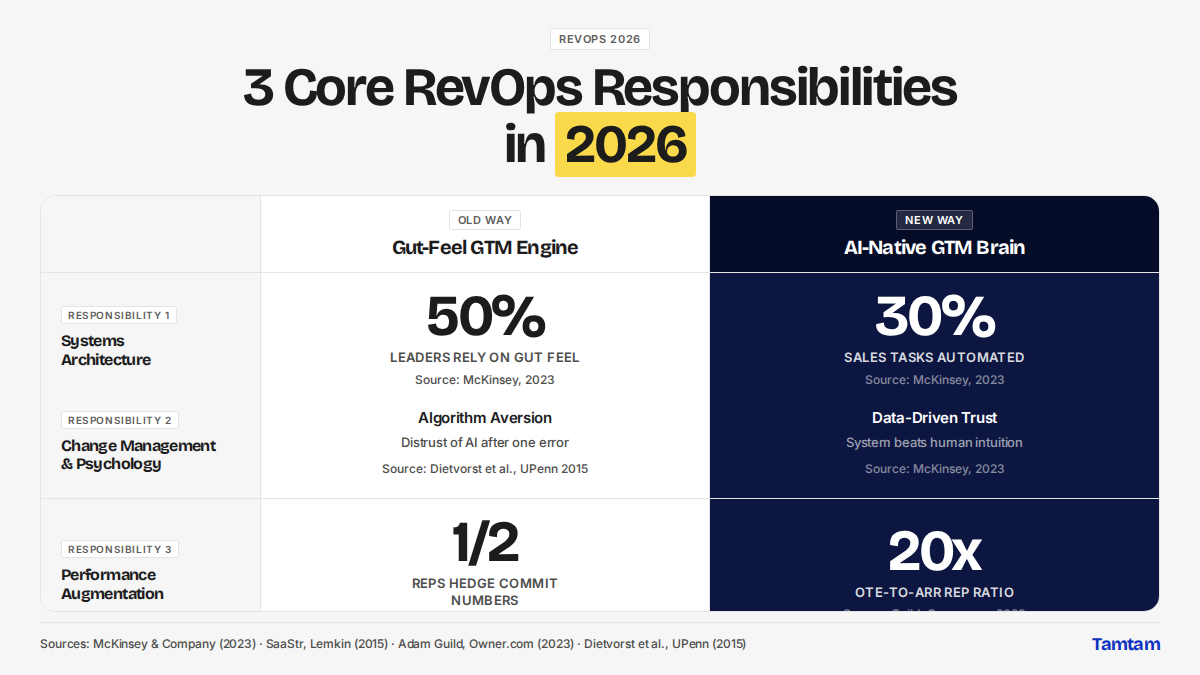
Revenue architecture is the holistic blueprint for how a company acquires customers and generates revenue. It moves beyond individual tactics to establish a deliberate, interconnected system that aligns the entire organization. This strategic framework connects a company's high-level go-to-market strategy to its daily execution. The design is typically owned by the Chief Revenue Officer (CRO) and built and maintained by the Revenue Operations function.
Core Components of Revenue Architecture
A comprehensive revenue architecture is built on several foundational pillars that must work in concert. While the specific design varies by company, it almost always includes:
- Go-to-Market Model: Defines the primary go-to-market motion (e.g., sales-led, product-led) and the specific sales plays used to engage prospects, such as account-based marketing.
- Customer Lifecycle Process: Maps the defined stages, handoffs, and rules of engagement as a prospect moves from initial awareness through the sales funnel and into post-sale expansion.
- Organizational Design: Outlines the structure of revenue teams (sales, marketing, customer success), including roles, responsibilities, and compensation plans that support the GTM model.
- Technology and Data Infrastructure: Encompasses the selection and integration of tools in the RevTech stack and the data flows that provide a single source of truth for reporting.
Architecture by Design vs. Default
Every company has a revenue architecture, but many grow one by default rather than by design. A default architecture is often fragmented and inefficient, leading to data silos, conflicting metrics between teams, and high operational friction as the company scales.
A deliberately designed architecture creates a cohesive revenue engine where all components are aligned. This alignment makes growth more predictable and scalable, as performance issues can be clearly diagnosed and addressed. Building and optimizing this system is a core responsibility of a mature Revenue Operations team, ensuring the business can adapt its model to changing market conditions without starting from scratch.
Also known as: revenue ops architecture