Key account management
Key account management (KAM) is the strategic discipline of nurturing and growing an organization's most valuable customer relationships for long-term, mutual success.
Key account management (KAM) is the strategic process of building and maintaining long-term, collaborative relationships with an organization's most important customers. Unlike traditional sales, which may focus on individual transactions, KAM treats a small portfolio of high-value accounts as strategic assets. The goal is to move beyond a simple vendor relationship to become an indispensable partner, deeply integrated into the customer's success and future planning.
Core Activities in Key Account Management
A successful KAM program is built on a foundation of deep customer knowledge and proactive engagement. It involves dedicated account planning, where teams create detailed roadmaps for growth within each key account. Key activities often involve multi-threading> relationships across the client’s organization, coordinating a cross-functional account team>, and identifying expansion opportunities through upselling> or cross-selling that align with the customer’s strategic objectives. This requires a shift from reactive problem-solving to proactively bringing new ideas and value to the customer.
How KAM Differs from Other Sales Functions
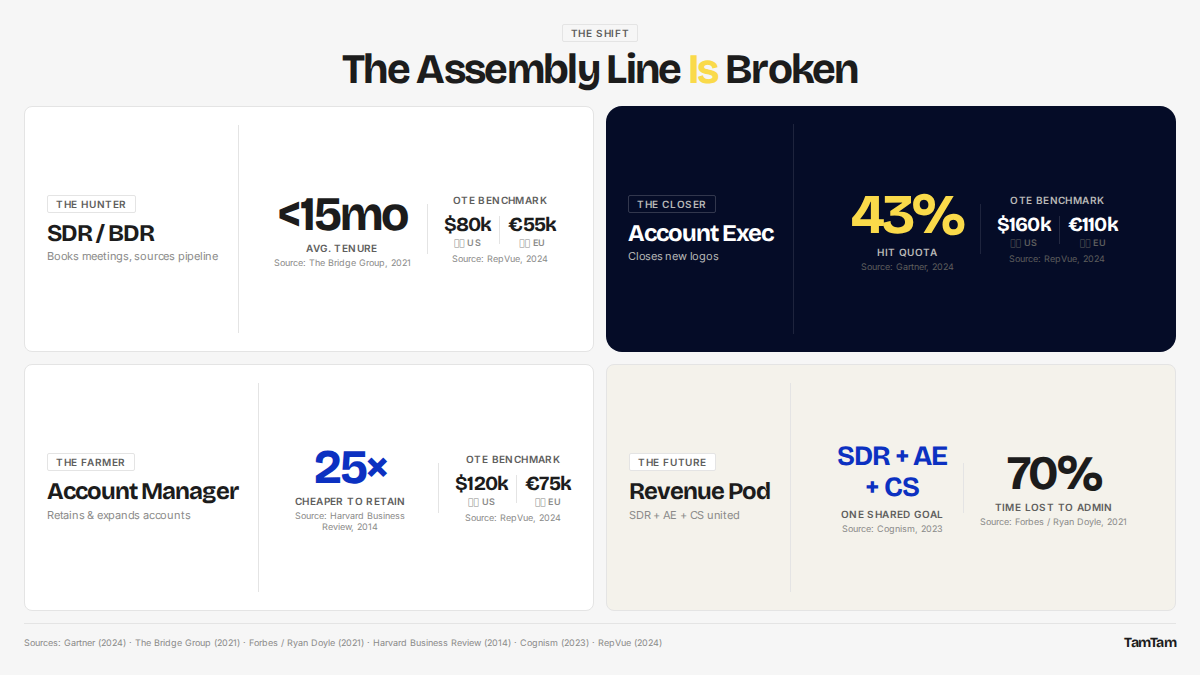
Key account management is distinct from both new business acquisition and general account management. While many sales roles focus on landing new logos, the Key Account Manager> is responsible for post-sale retention and expansion. This role prioritizes long-term value over short-term revenue, measured by metrics like net revenue retention> and customer lifetime value. It is the strategic pillar of a land-and-expand> motion, requiring a consultative skillset focused on partnership and value co-creation rather than transactional selling.
Also known as: KAM, strategic account management
See how Tamtam handles account-based & key accounts in practice.
Learn more →