Ideal Customer Profile
An Ideal Customer Profile (ICP) is a detailed description of the type of company that gains the most value from a product and is most profitable to acquire.
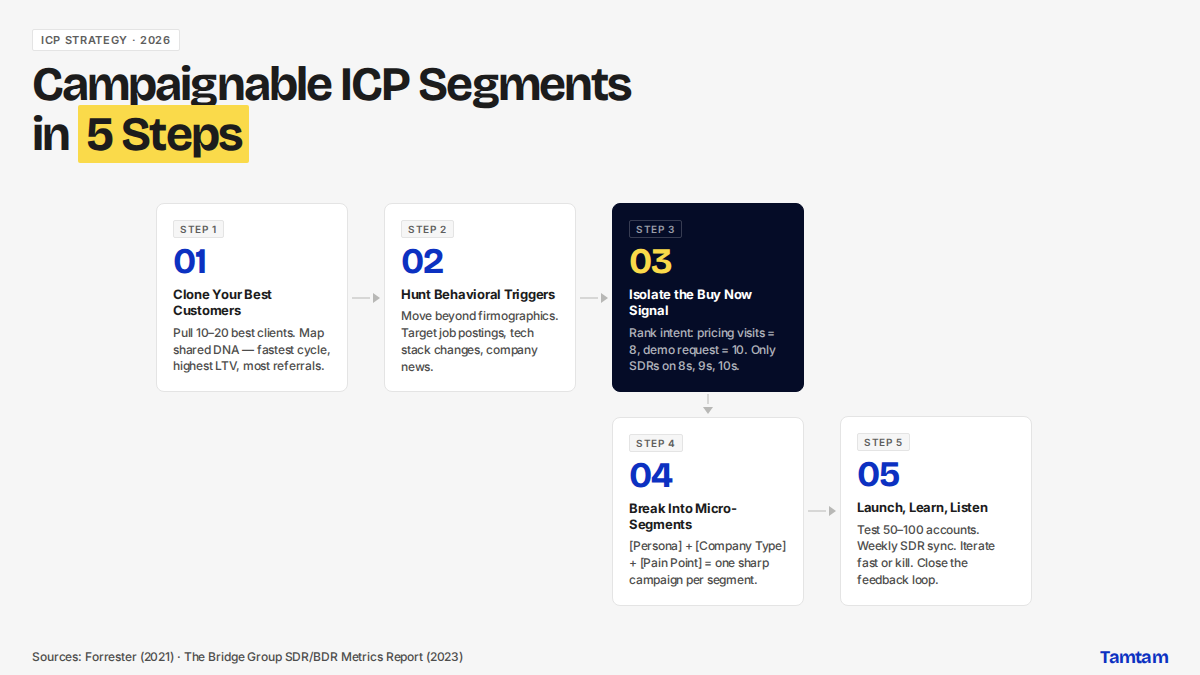
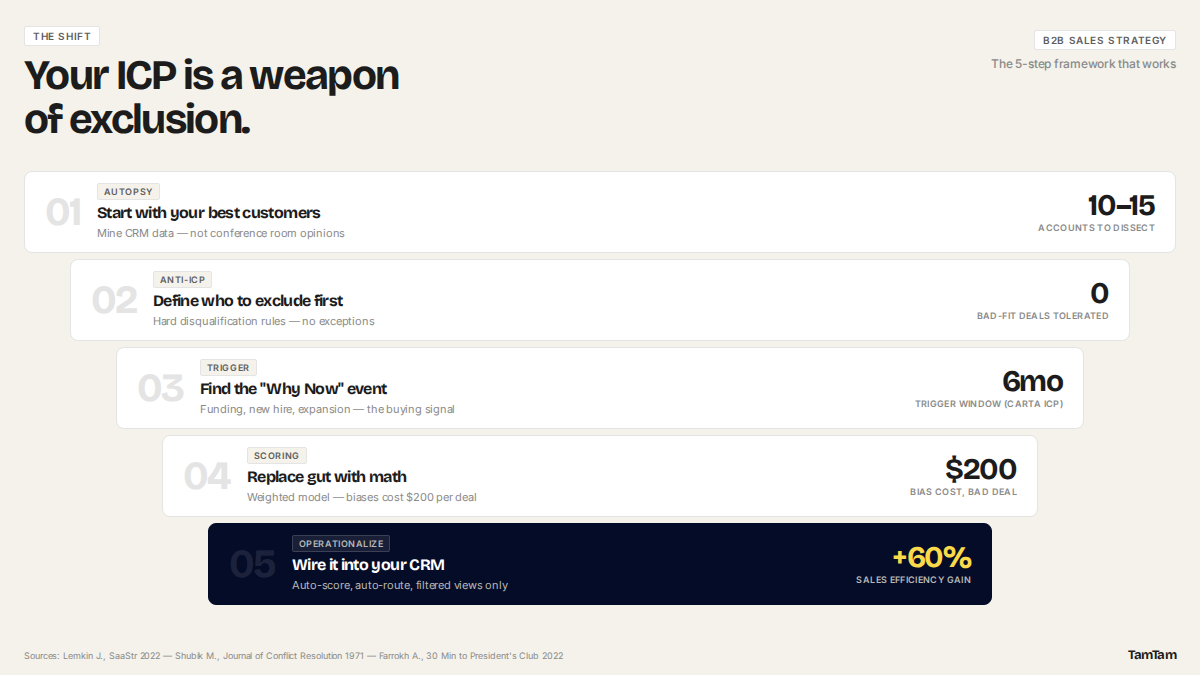
An Ideal Customer Profile (ICP) is a detailed description of the type of company that represents the best possible customer for a business. It defines the firmographic, technographic, and behavioral attributes of the accounts most likely to buy, renew, and expand their use of a product or service. An effective ICP is not a guess: it is built by analyzing the common characteristics of a company's most successful existing customers.
How an ICP is Defined
An ICP provides a multi-faceted view of a target account, moving beyond a single attribute like industry or employee count. It combines several data points to create a precise definition for market segmentation.
Common attributes include:
- Firmographics: Industry, company size (revenue or employee count), geographic location, and growth rate.
- Technographics: The specific software, hardware, and other technologies a company uses in its tech stack.
- Behavioral Data: Public signals like recent funding rounds, executive hires, or significant hiring for specific departments.
- Business Model: How the company makes money, such as B2B SaaS, e-commerce, or professional services.
ICP vs. Buyer Persona
While closely related, an ICP and a buyer persona serve different purposes. The ICP describes the target company or account. It answers the question, "What kind of organization should we be selling to?"
A buyer persona, in contrast, describes the specific individuals within that organization. It answers the question, "Who are the people we need to convince inside our ideal customer?" A company will have one ICP but may have multiple buyer personas, for instance, the economic buyer, the end-user, and the technical champion.
Why an ICP Matters
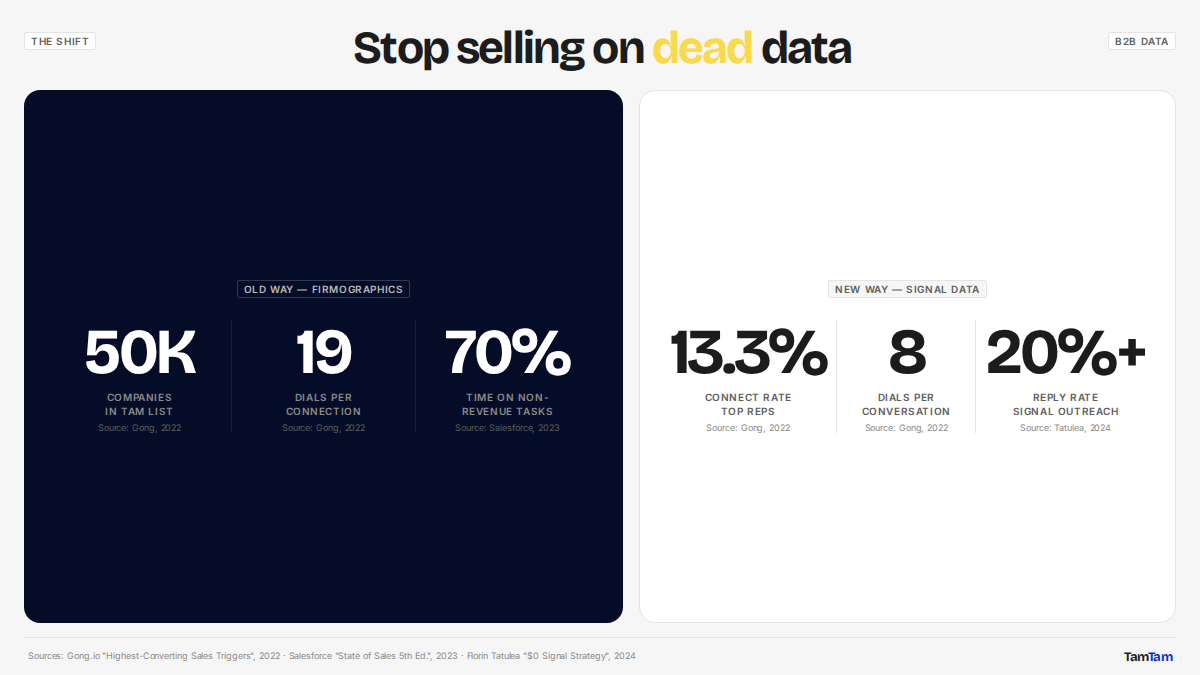
A well-defined ICP is foundational to an efficient go-to-market strategy. It allows sales and marketing teams to focus resources on the accounts with the highest probability of closing. It informs the creation of a target account list, helps find high-potential lookalike accounts, and is the basis for calculating an ICP fit score to prioritize leads. By focusing on a narrower, more qualified segment of the Total Addressable Market, teams can tailor their messaging and outreach for greater effectiveness.
Also known as: ICP, ICP marketing, ICP sales