Segmentation
Segmentation is the process of dividing a broad market into distinct subgroups of companies that share similar characteristics and buying behaviors.
Segmentation is the practice of dividing a company's Total Addressable Market (TAM) into smaller, discrete groups. These groups, or segments, consist of companies that share similar characteristics and are likely to respond similarly to marketing and sales efforts. The goal is to move from a broad market view to a manageable set of focused customer groups, enabling more precise and effective go-to-market strategies.
How B2B Segmentation Works
B2B segmentation uses a combination of data types to create meaningful groups. By layering multiple criteria, a company can identify high-potential niches within its serviceable market.
Common criteria include:
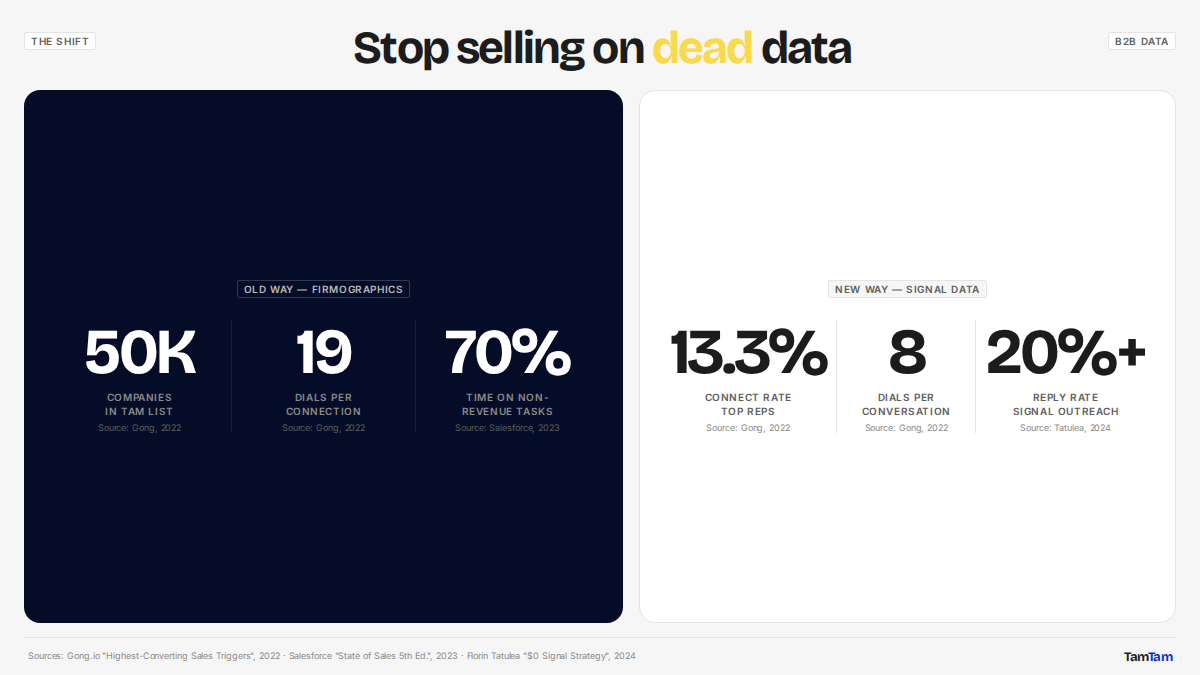
- Firmographics: Objective company attributes like industry, company size (employee count or revenue), and geographic location.
- Technographics: The technology stack a company uses, such as specific CRM, marketing automation, or cloud infrastructure platforms.
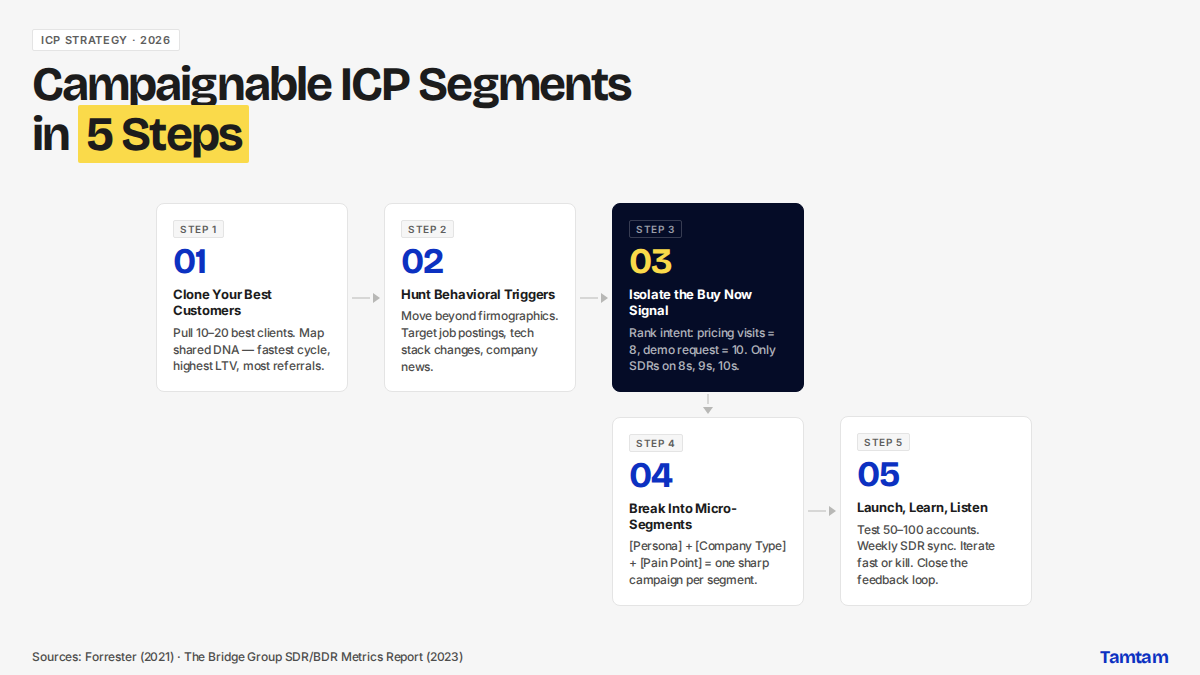
- Behavioral data: Actions that signal intent or engagement, such as website visits, content downloads, or participation in industry events.
Segmentation vs. Ideal Customer Profile
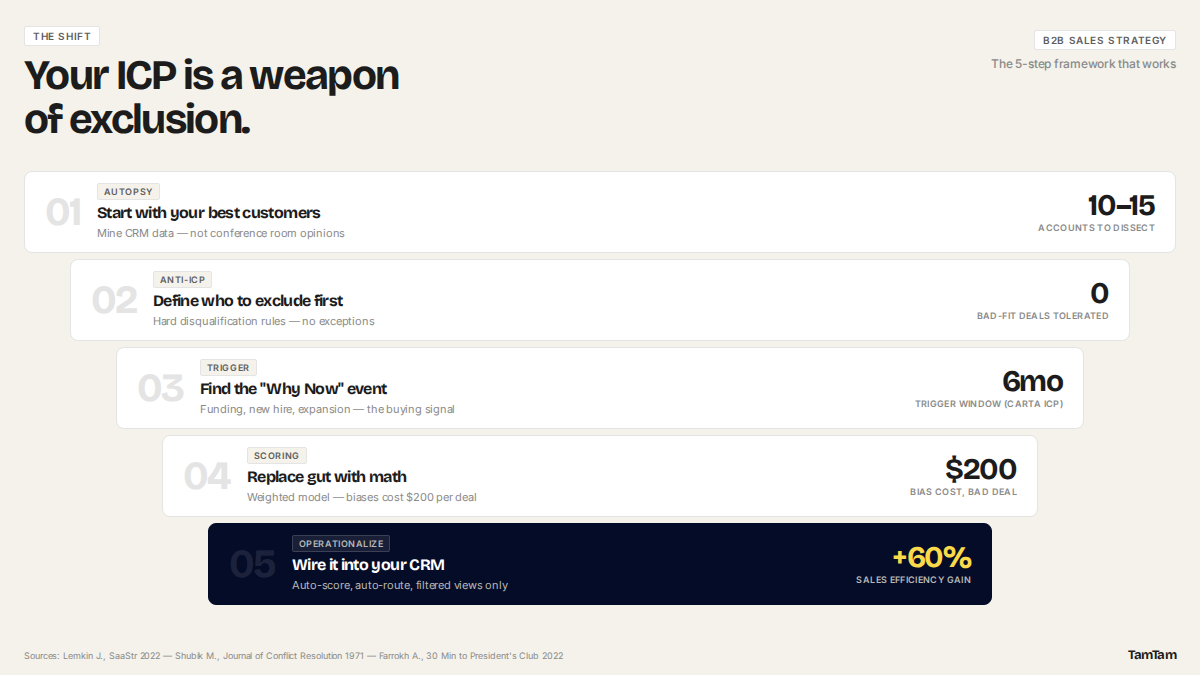
While related, segmentation and an Ideal Customer Profile (ICP) are distinct concepts. Segmentation is the broad process of dividing the entire market into groups. An ICP, on the other hand, is a detailed description of the perfect single company account, often derived by analyzing the shared traits of the most successful customers within a specific, high-value segment. In practice, a strong segmentation strategy is a prerequisite for defining an accurate and actionable ICP.
Why Segmentation Matters
Effective segmentation allows a go-to-market team to operate with greater focus and efficiency. Instead of using generic messaging for the entire market, teams can tailor outreach, content, and value propositions to the specific pains and priorities of each segment. This leads to more resonant marketing campaigns, higher sales conversion rates, and better resource allocation. Ultimately, segmentation helps teams build a target account list that reflects their best opportunities and create distinct buyer personas for each priority group.
Also known as: market segmentation, account segmentation, B2B segmentation