NEAT selling
A modern qualification framework focused on a buyer's core Need, Economic impact, Access to authority, and Timeline.
NEAT selling is a modern sales qualification framework used to evaluate opportunities in complex B2B sales cycles. The acronym stands for Need, Economic impact, Access to authority, and Timeline. NEAT was developed as a buyer-centric alternative to legacy frameworks like BANT, guiding reps to lead with value and build a strong business case rather than running a rigid checklist.
The Four Pillars of NEAT
- Need: Uncover the core challenges driving the buyer's search, not just surface-level pain points. Link the solution directly to those foundational issues.
- Economic impact: Quantify the financial implications. Work with the buyer to build a business case demonstrating ROI (increased revenue, cost savings, risk reduction), a core principle of value-selling.
- Access to authority: Map the buying committee, identify key decision-makers and influencers, and secure access to them. Modern deals involve multiple stakeholders, so "do you have authority?" is replaced by "can the rep navigate the decision process?".
- Timeline: Frame urgency around the buyer's circumstances. A compelling timeline ties to a critical event on the buyer's end (product launch, regulatory deadline, competitive threat), not an arbitrary date set by the seller.
NEAT vs. BANT
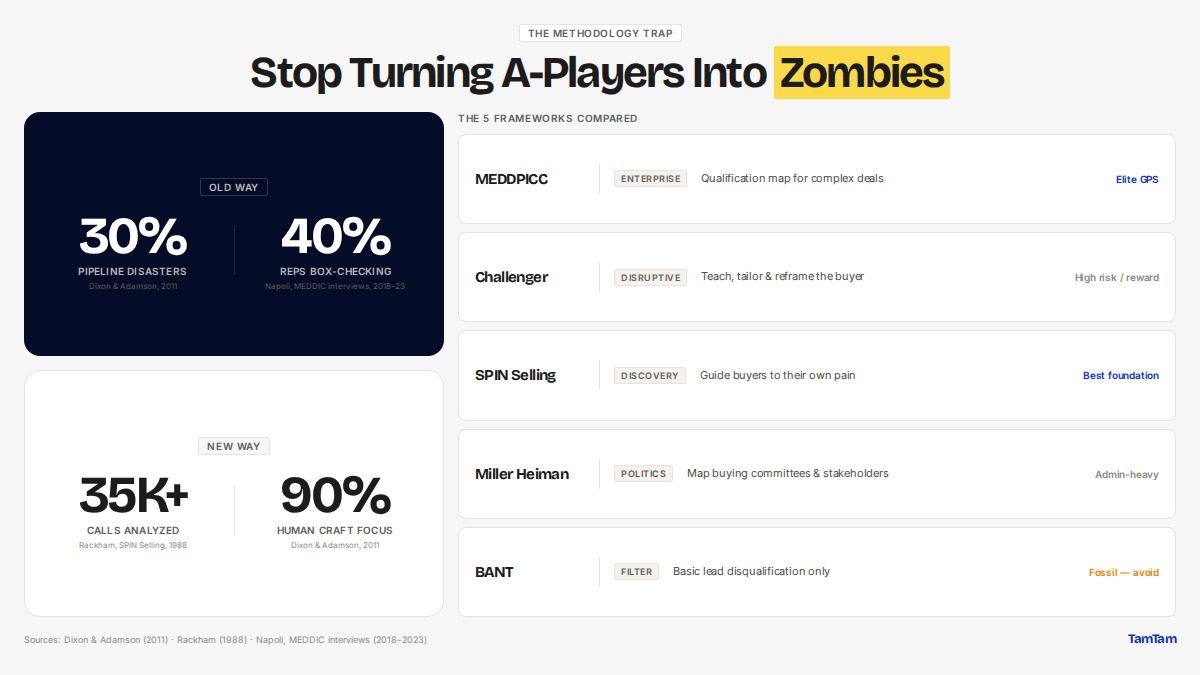
NEAT was a direct response to BANT's shortcomings in modern sales. BANT starts with Budget, often disqualifying viable deals prematurely. NEAT starts with Need, centering the conversation on the customer's problem. BANT's "Authority" is a simple gate; NEAT's "Access to authority" is a strategic exploration of the decision-making unit, encouraging reps to act as consultative partners who help buyers build consensus.
Also known as: NEAT methodology, NEAT framework