Sales management
Sales management is the discipline of leading a sales team to achieve its revenue goals through strategic planning, process design, and performance coaching.
Sales management is the strategic discipline of planning, directing, and controlling a company's sales activities to achieve its revenue objectives. It encompasses all the processes and leadership practices required to build and scale a high-performing sales organization. This function moves beyond day-to-day people management to include strategic resource allocation, process optimization, and performance analysis.
Effective sales management creates a predictable and scalable revenue engine by translating high-level business goals into actionable targets and workflows for the sales team.
Core Responsibilities
While the specific duties depend on the organization's size and structure, the core responsibilities of sales management fall into several key areas. These activities form the foundation for consistent team performance and growth.
- Team Building and Development: Recruiting, hiring, and onboarding new sales talent. It also includes providing ongoing coaching, training, and professional development to improve skills and quota attainment.
- Performance Management: Setting sales quotas, defining key performance indicators (KPIs), and regularly tracking metrics like deal velocity and win rates.
- Strategy and Process: Designing and refining the company’s sales cycle, defining sales territories, and implementing standard operating procedures and sales methodologies.
- Forecasting and Reporting: Accurately predicting future sales revenue and reporting on team performance to executive leadership, ensuring alignment with overall business strategy.
The Role of Operations
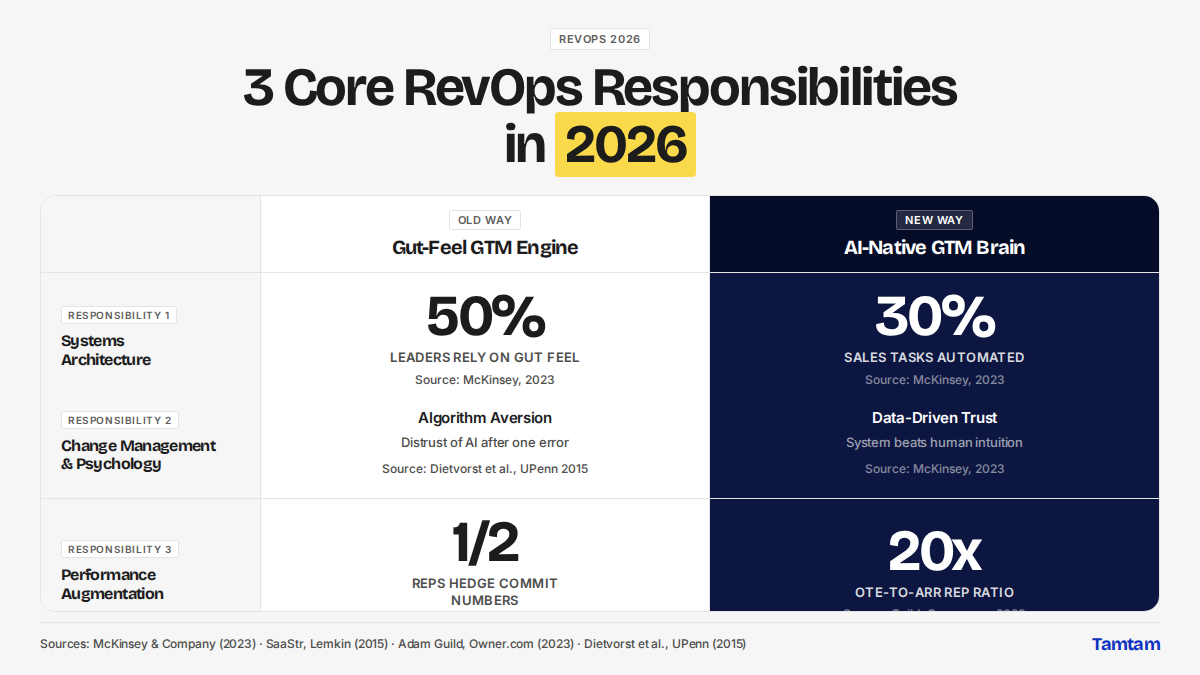
Modern sales management relies heavily on a close partnership with operations teams. While a Sales Manager focuses on leading people, a Revenue Operations or Sales Operations function provides the infrastructure for success. These support teams manage the rev tech stack, ensure data hygiene, and provide the analytics that sales leaders need to make informed decisions. This collaboration allows sales management to focus less on administrative tasks and more on strategic coaching and execution.
Also known as: sales leadership discipline