June 23, 2026
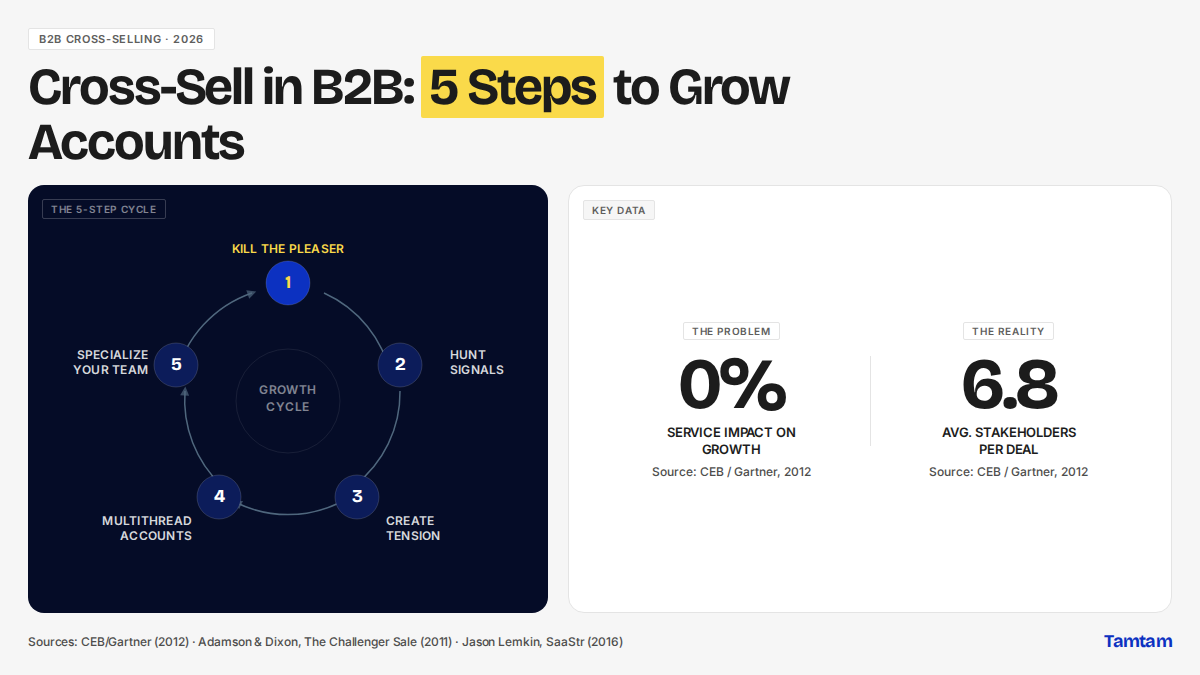
Aggressive 'Challenger' sales tactics that work for new business are toxic for existing accounts, creating churn instead of expansion. To upsell effectively, use a 'Why Evolve' message that validates past success and frames an upgrade as the safest way to protect their investment. For cross-sells, recognize it's often easier to bundle for new customers than to replace a competitor for an existing one. Ultimately, the best expansion isn't forced; it's triggered by customer buying signals, shifting the process from guessing to knowing.
Everyone in B2B sales has a story about the "fake roadmap review."
SaaS investor Jason Lemkin famously described this cringe-inducing sales tactic. An Account Manager invites a happy customer to a "strategic business review." But instead of discussing strategy, they ambush the customer with a barely disguised pitch for a new product. The roadmap slide is just a prop for a clumsy cross-sell attempt. The customer, who thought they were a valued partner, suddenly feels like a mark. Trust evaporates. The relationship sours.
This move is a classic symptom of a bigger disease: applying new-business tactics to your existing customer base. It's treating your loyal customers, the ones who already pay your salary, like fresh meat.
In a world obsessed with the "Challenger Sale," we've convinced ourselves that aggressively disrupting a buyer's worldview is the only way to win. And for net-new business, where you have to unseat an incumbent, that can be true.
But for your own customers? It's poison.
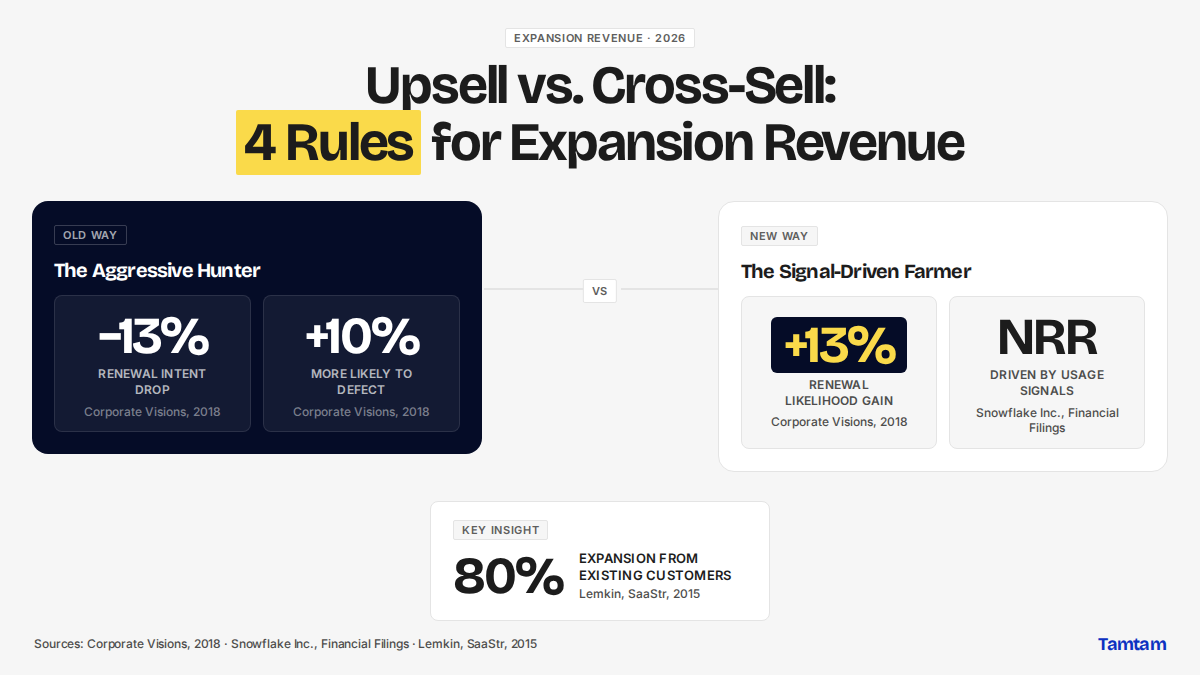
Research confirms it. A study by Corporate Visions and Dr. Zakary Tormala, a Stanford social psychologist, found that using a provocative, "challenger" message on existing customers actually decreased their loyalty and renewal intent. You’re not a challenger anymore. You’re the status quo they chose. Attacking the status quo means you’re attacking their past decision. You’re telling them they were dumb to pick you.
So, what actually works? How do you upsell and cross-sell without torching your relationships? It comes down to understanding the distinct psychology of customer expansion and choosing the right play for the right moment.
This is the classic "Challenger" approach, misapplied. It's the sales rep who comes in hot, aiming to disrupt the customer's thinking by highlighting a massive, previously unseen problem that, surprise, their other product just so happens to solve.
This approach is the polar opposite of the Aggressive Hunter. The goal here isn't to challenge anything. It's to reinforce everything. The entire conversation is about validating the customer's initial decision to choose you.
This is where things get interesting. The Safe Evolver is a hybrid approach specifically designed for upselling a customer to a higher tier of the same product they already use. It's a nuanced two-step dance.
First, you validate their original choice (The Status Quo Defender). "You made a smart decision choosing our Pro plan. You’ve achieved X, Y, and Z, which is fantastic."
Second, you introduce an external change or a new pressure. "However, we're seeing new market shifts/security threats/compliance requirements that could put those gains at risk. The safest, most logical way to protect your investment and adapt is to move to the Enterprise plan."
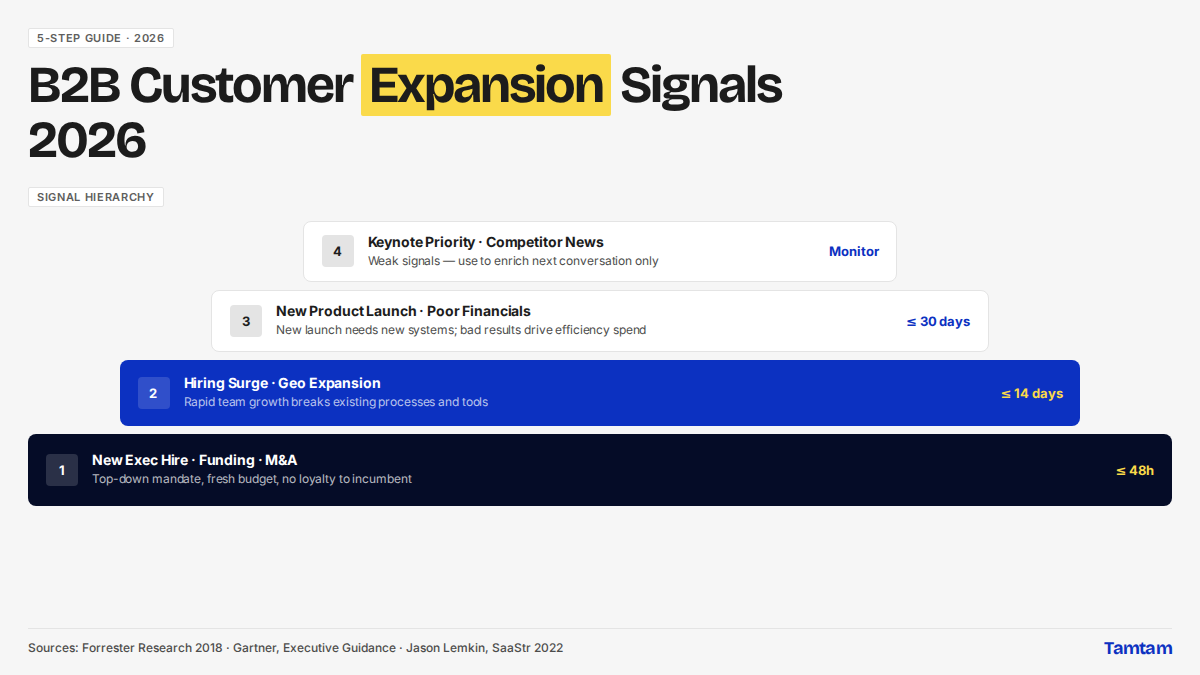
This approach transcends the pitch altogether. It's about letting the customer's own actions tell you when they're ready to buy more. Instead of relying on a calendar to schedule a QBR, you rely on behavioral data from your product and other external sources.
| Approach Name | Primary Goal | Core Psychology It Taps Into | Key Tactic / "The Pitch" | Where It Fails Spectacularly |
|---|---|---|---|---|
| The Aggressive Hunter | Acquisition (Misused for Expansion) | Fear, Uncertainty, Doubt (FUD) | "Everything you're doing is wrong, and you're about to fail. Buy our other thing." | With existing customers. It creates resentment, kills trust, and invites churn. |
| The Status Quo Defender | Renewal / Retention | Status Quo Bias, Anticipated Regret | "You made a brilliant choice. Changing now would be a painful, risky mistake." | When you need to grow the account. It's a purely defensive, zero-growth play. |
| The Safe Evolver | Upsell (Higher Tier) | Loss Aversion, Need for Safety | "You were right to choose us. Now, let's evolve to protect your gains from this new threat." | For cross-selling an unrelated product or if the "new threat" is manufactured bullshit. |
| The Signal-Driven Farmer | Scalable Expansion (Upsell & Cross-sell) | Intent & Context | No single pitch. Outreach is triggered by customer actions (e.g., hitting usage limits). | Without the right data infrastructure to capture and interpret buying signals. |
Stop using a hammer for every problem. The right approach depends entirely on your goal, the context you have, and the person you're talking to.
1. What's the Goal? First, be honest about what you're trying to achieve.
2. Who's the Buyer? Are you selling this new product to your existing champion, or to a totally different department? If your champion is the Head of Sales and you're now trying to cross-sell an HR module to the Head of People, that's not an expansion sale. It's a brand new, net-new sale that just happens to be at an existing logo. You’ll need a hunter's tactics, but with the benefit of an internal referral. Don't fool yourself into thinking it's an easy cross-sell.
3. What's the Signal? This is the most important question. Is your outreach based on the calendar ("Hi, it's the end of the quarter!") or on a real customer action ("I saw you just hit your API call limit")? Calendar-based outreach is a gamble. You're interrupting them, hoping you get lucky. Signal-based outreach is an informed, welcome conversation built on expansion signals. You're not guessing. You know they have a need, right now.
The future of expansion isn't about cramming more QBRs onto the calendar. It's about precision. It's about engineering a system that listens for the moments your customers are ready to grow, based on their own actions and other public triggers. This is the entire principle behind Tamtam. Instead of forcing conversations, the platform continuously researches every account, surfacing the specific triggers, from product usage spikes to new strategic initiatives revealed in an earnings call, that signal a real opportunity. It’s how you stop guessing and start building an expansion engine that feels helpful, not hostile.
Set up for you before our first call
Book a demo