Challenger sale
A sales methodology where reps teach prospects new insights, tailor messaging to their specific needs, and assertively take control of the sales conversation.
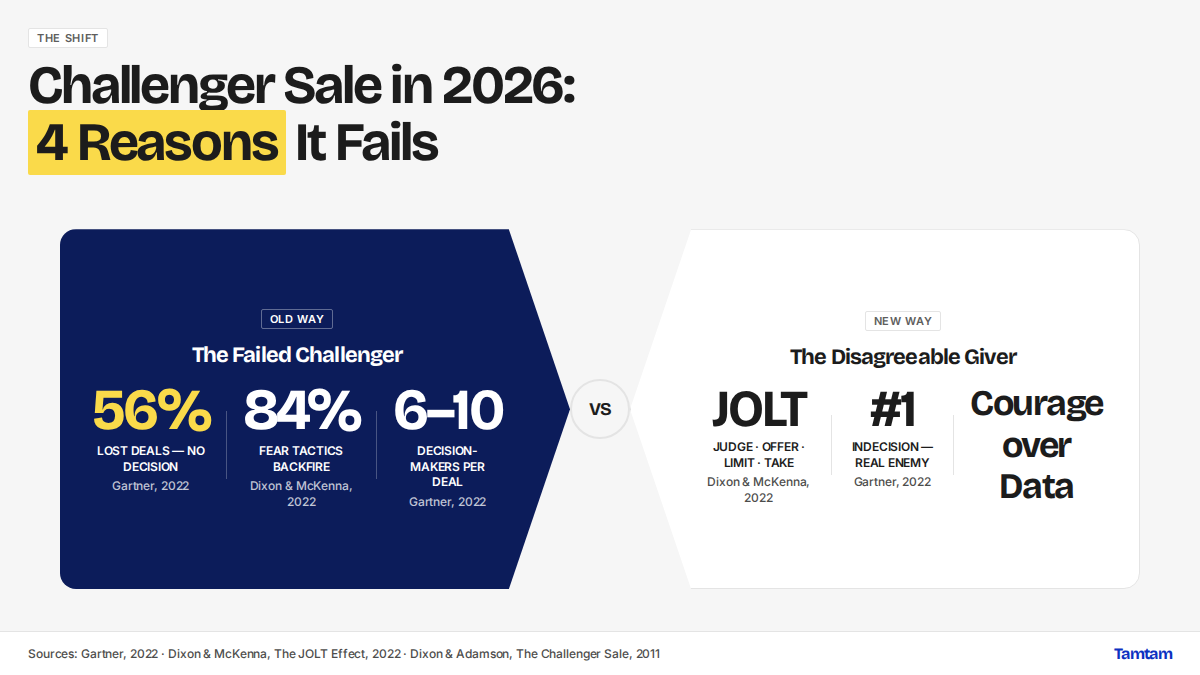
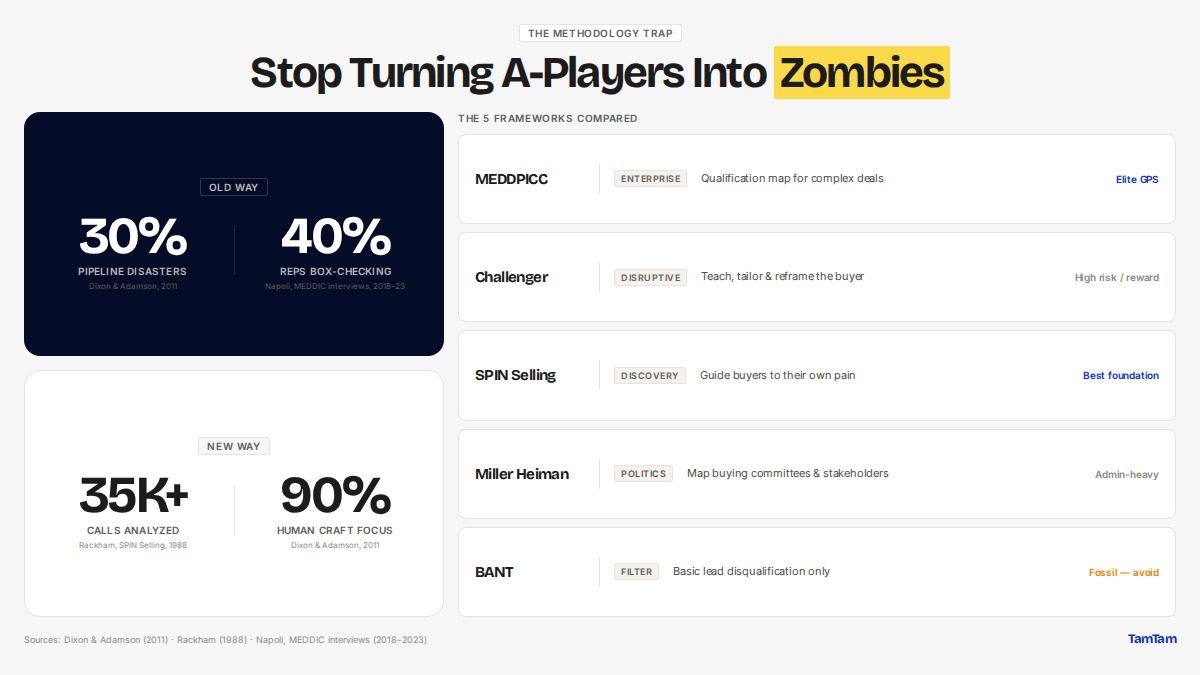
The Challenger sale is a sales methodology centered on teaching prospects new insights, tailoring communication to their specific context, and taking control of the sales process. The model was introduced in the 2011 book "The Challenger Sale" by Matthew Dixon and Brent Adamson, based on CEB (now Gartner) research into the behaviors of thousands of sales representatives across complex B2B deals.
Why the Challenger Profile Wins Complex Deals
CEB's research identified five rep profiles: Challenger, Hard Worker, Relationship Builder, Lone Wolf, and Reactive Problem Solver. In simple deals the five performed equally; in complex, high-value deals, Challengers significantly outperformed every other profile, while Relationship Builders were the least likely to succeed. The takeaway: in modern enterprise sales, the ability to challenge a customer's perspective beats rapport-building.
The Teach, Tailor, Take Control Model
The Challenger methodology rests on a three-part operating model:
- Teach for differentiation: Challengers teach prospects something new and valuable about their own business. This "commercial teaching" reframes the customer's problems and connects them back to the supplier's unique strengths, a form of value-based selling.
- Tailor for resonance: Insights and messaging are calibrated to the specific stakeholder. A generic pitch lands flat; the message must connect to what that person owns and worries about.
- Take control of the sale: Challengers are assertive without being aggressive. They are comfortable discussing money and can push back on customer demands to guide the buying process. The constructive tension moves the deal forward.
Also known as: Challenger sales, Challenger sales method, Challenger sales methodology