Solution selling
A sales methodology that centers on diagnosing a buyer's specific business problems and positioning a product or service as the explicit solution.
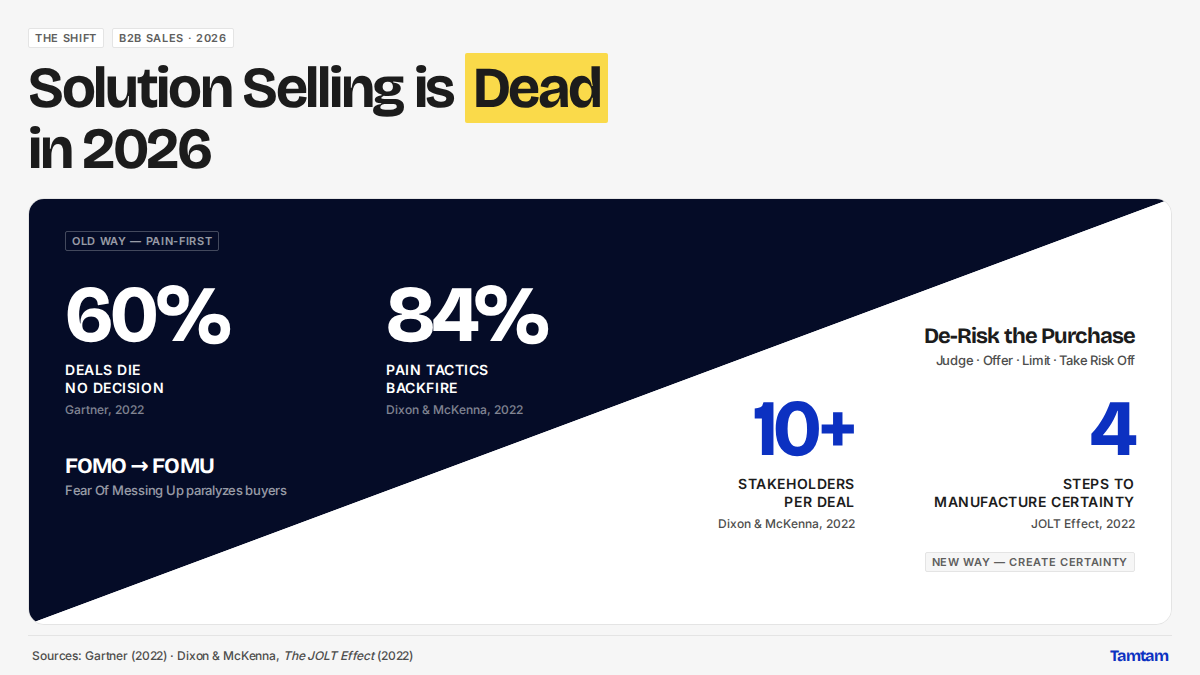
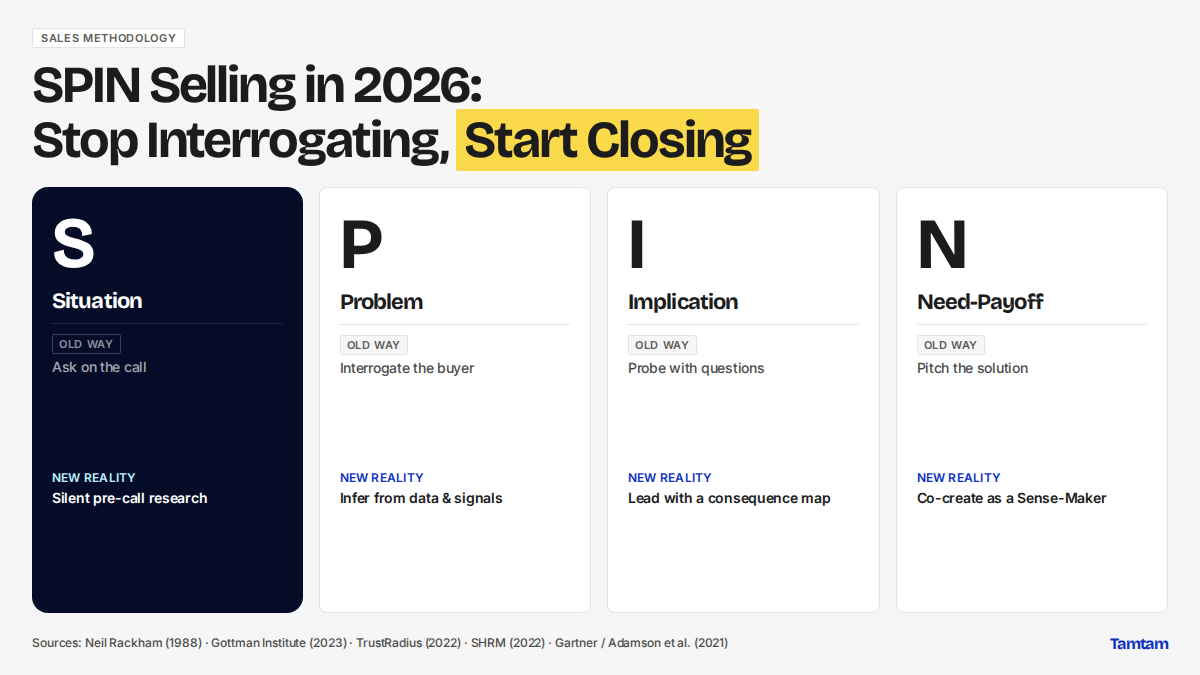
Solution selling is a sales methodology where the rep acts as a consultant to diagnose a prospect's specific business needs and pain points, then recommends a product or service as the tailored solution. Developed in the 1980s, it marked a shift away from feature-pitching toward problem-solving dialogue. It influenced later frameworks like SPIN selling and remains foundational for complex deals where the buyer's problem is not well-defined.
How Solution Selling Works
The process is structured around discovery rather than pitching. While specific frameworks vary, the methodology generally follows three phases:
- Diagnosing needs: The rep uses open-ended questions to understand the buyer's current situation, processes, and challenges. The goal is to uncover specific, often unstated, pain points.
- Quantifying the pain: The rep works with the buyer to explore the business impact of the identified problem (lost revenue, operational inefficiency), a core tenet of value selling.
- Vision casting: The rep helps the buyer envision a future state where the problem is solved, then frames the product as the vehicle to reach it.
Solution Selling vs. Challenger Sale
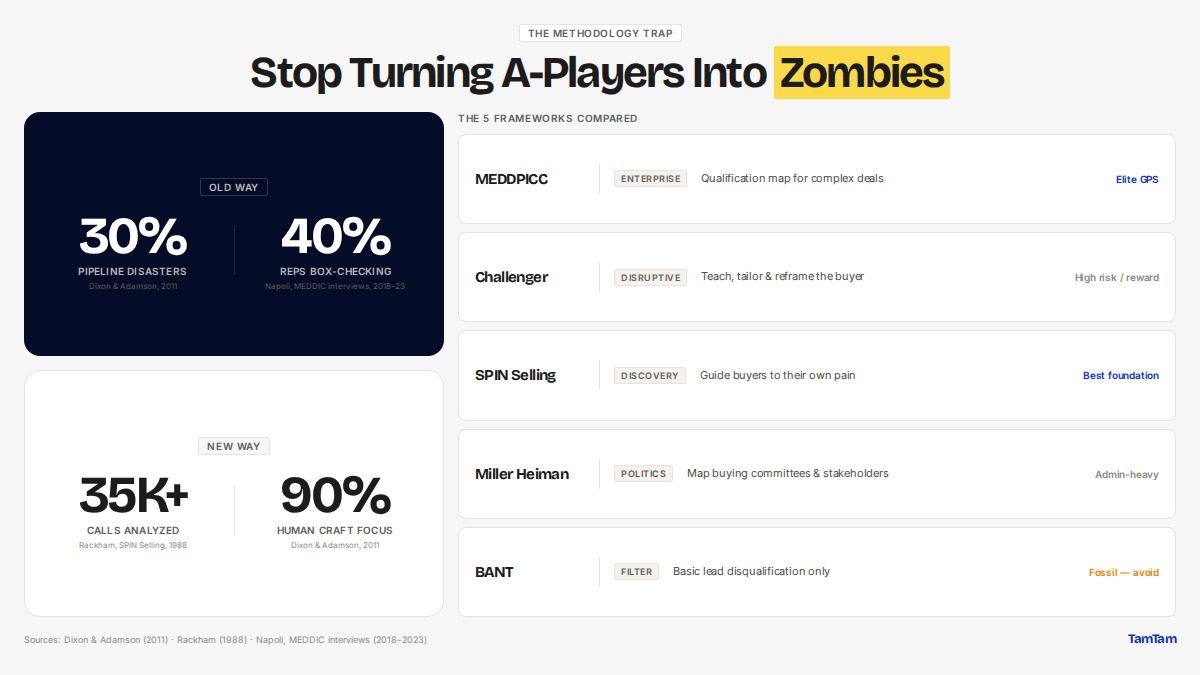
Solution selling assumes the buyer can articulate their own problem. The Challenger sale, developed three decades later from CEB research on complex B2B deals, argues that the best reps teach prospects about problems they did not know they had. Solution selling remains widely used; Challenger has gained ground where buyers do extensive online research before engaging.
Also known as: solutions selling