SPIN selling
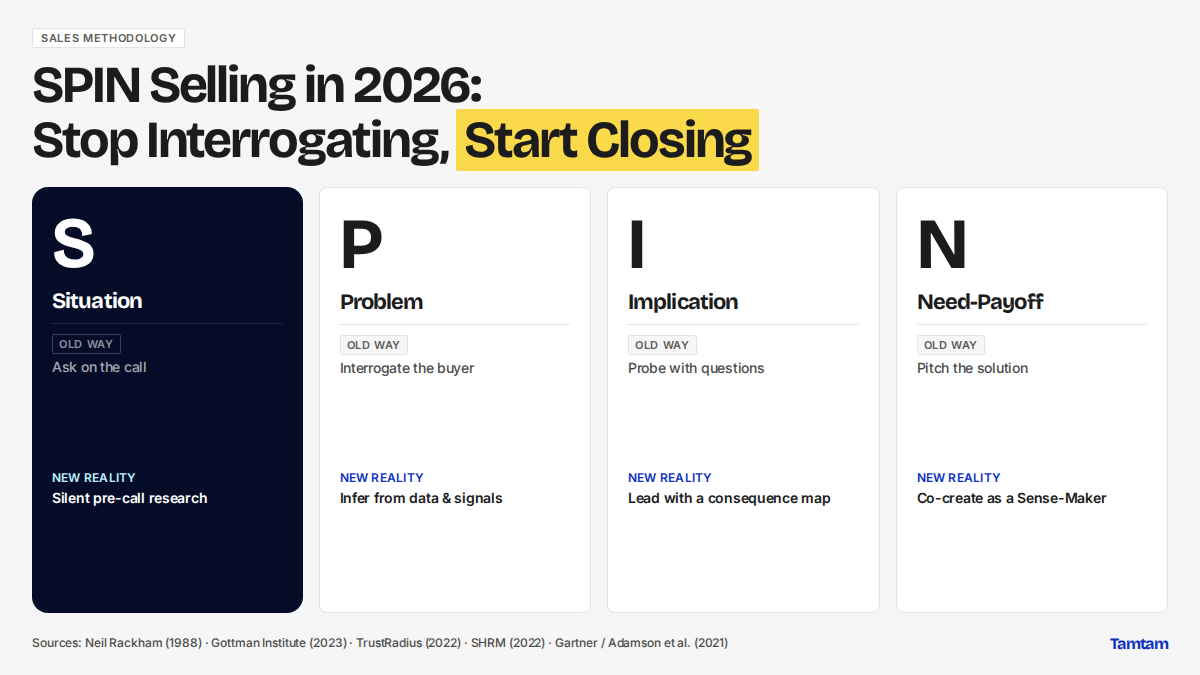
A question-based sales methodology where reps guide discovery using four types of questions: Situation, Problem, Implication, and Need-payoff.
SPIN selling is a sales methodology centered on a sequence of questions designed to uncover a buyer's pain points and build a case for change. Developed from observational research by Neil Rackham, the acronym SPIN stands for the four types of questions reps use to guide a discovery call: Situation, Problem, Implication, and Need-payoff. The goal is to help the buyer discover the urgency of their problem on their own terms.
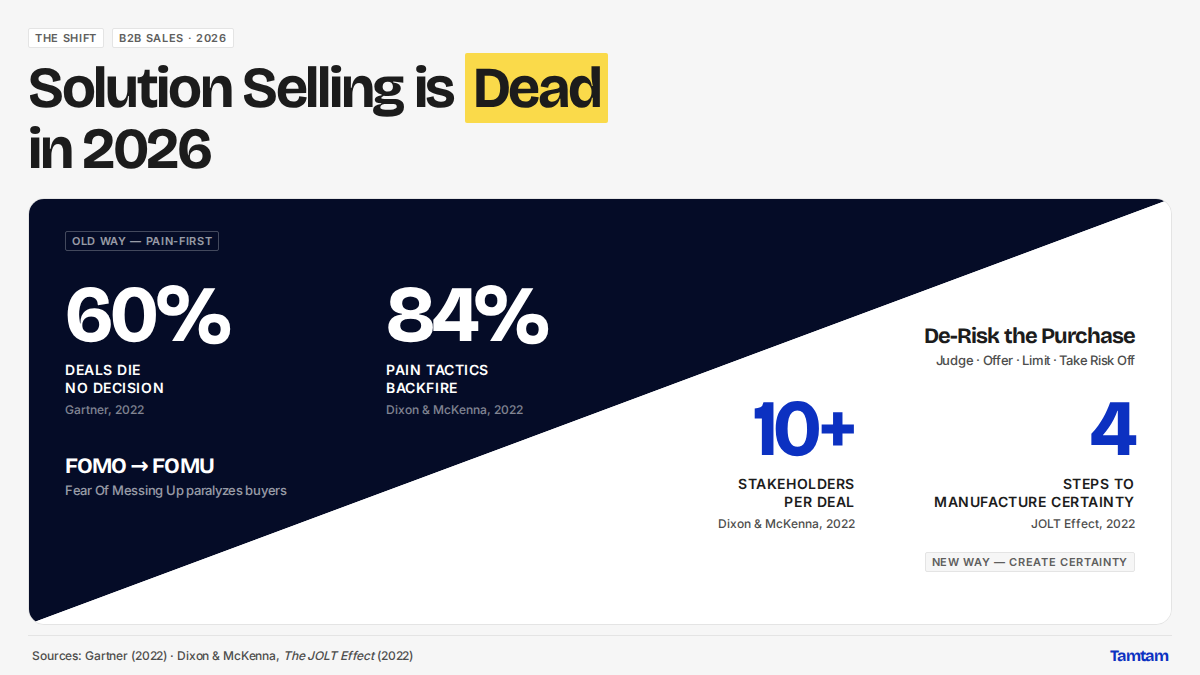
The methodology structures the conversation as a journey. Reps first establish context, then identify a problem, explore its business consequences, and finally guide the buyer to articulate the value of a solution. This approach is foundational to many forms of consultative or solution-selling motions.
The Four Types of SPIN Questions
The SPIN sequence moves from general, low-stakes questions to specific, high-value ones.
- Situation questions gather facts about the buyer’s current state. For example: "What is your current process for managing customer data?"
- Problem questions probe for challenges, difficulties, or dissatisfactions. For example: "How reliable is that data when your team needs it for forecasting?"
- Implication questions explore the consequences and effects of the identified problems. For example: "What is the impact on your sales team's quota attainment when the forecast is inaccurate?"
- Need-payoff questions encourage the buyer to articulate the benefits of a solution. For example: "If you could improve forecast accuracy by 15%, what would that mean for your annual planning?"
SPIN vs. Qualification Frameworks
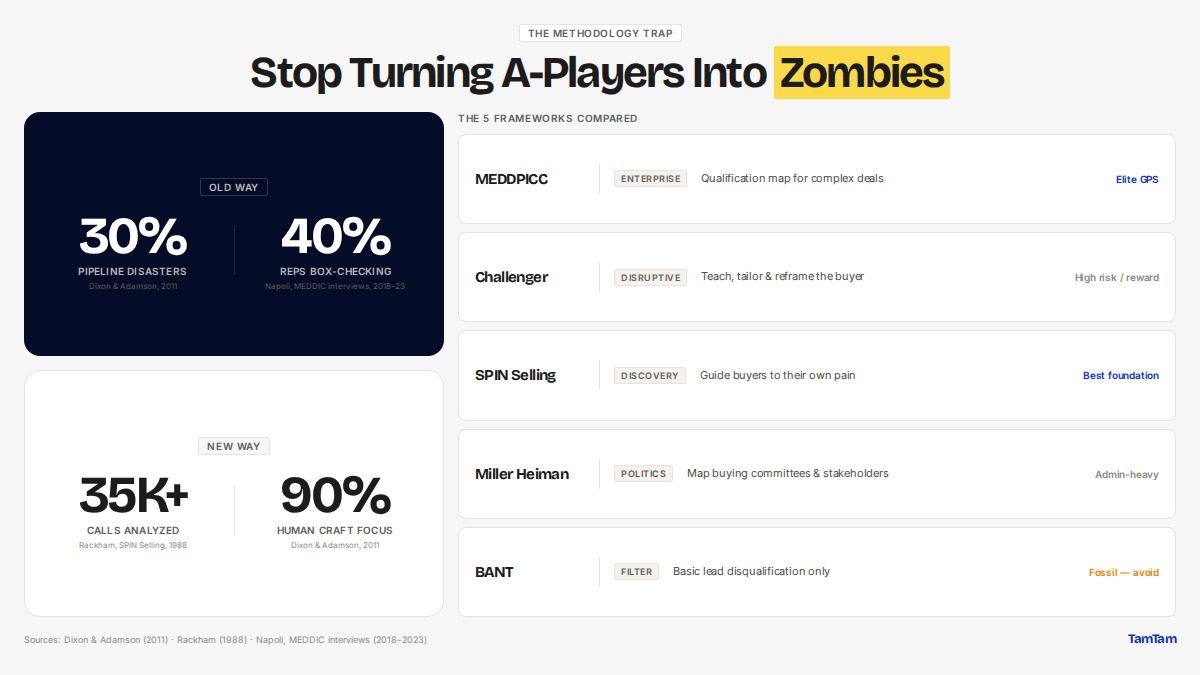
SPIN selling is a conversational technique, not a qualification framework. It dictates how a sales representative should structure their questions and guide a discovery call. It is used to develop a deep understanding of the customer's pain.
In contrast, qualification frameworks like MEDDIC or BANT are checklists of information a rep needs to gather to determine if a deal is worth pursuing. For example, a rep might use Implication and Need-payoff questions to uncover the "Metrics" and "Identified Pain" criteria required by the MEDDIC framework. The two concepts are complementary: SPIN is the tool used to complete the qualification checklist.
Also known as: SPIN sales, SPIN methodology, SPIN sales method