Firmographics
Firmographics are descriptive attributes of an organization, such as industry, revenue, and employee count, used to segment and target potential B2B customers.
Firmographics are descriptive attributes that provide a quantitative overview of an organization. This data categorizes companies based on stable, objective characteristics, similar to how demographics classify individuals. Common examples include industry, annual revenue, employee count, geographic location, and ownership structure.
How Firmographics Are Used
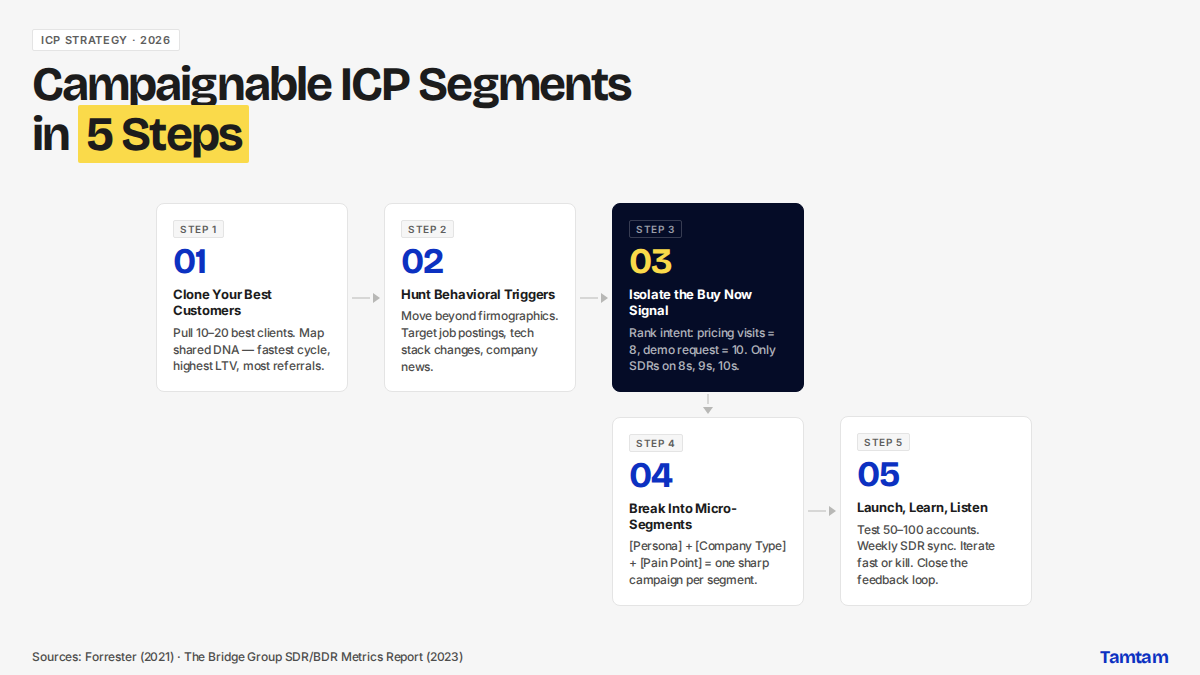
Sales and marketing teams use firmographics as the primary input for market segmentation. By filtering a total addressable market based on these attributes, organizations define their Ideal Customer Profile and direct outreach toward companies most likely to need and afford the solution. The same data feeds lead routing, territory planning, and account scoring.
Key Examples of Firmographic Data
- Industry: The market vertical a company operates in (Software, Financial Services, Healthcare).
- Company Size: Measured by employee headcount or annual revenue.
- Geography: The location of a company's headquarters, regional offices, or operating areas.
- Ownership Type: Publicly traded, privately held, or non-profit.
- Company Age: Years in business, often inferred from founding year.
Firmographics vs. Other Data Types
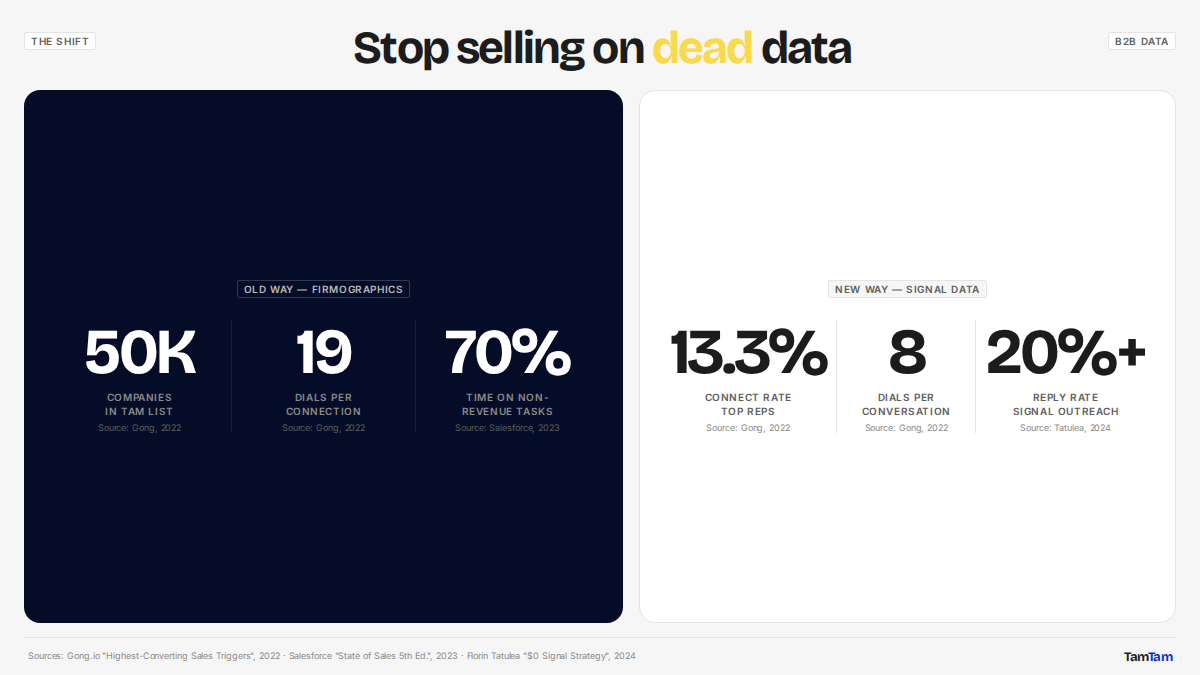
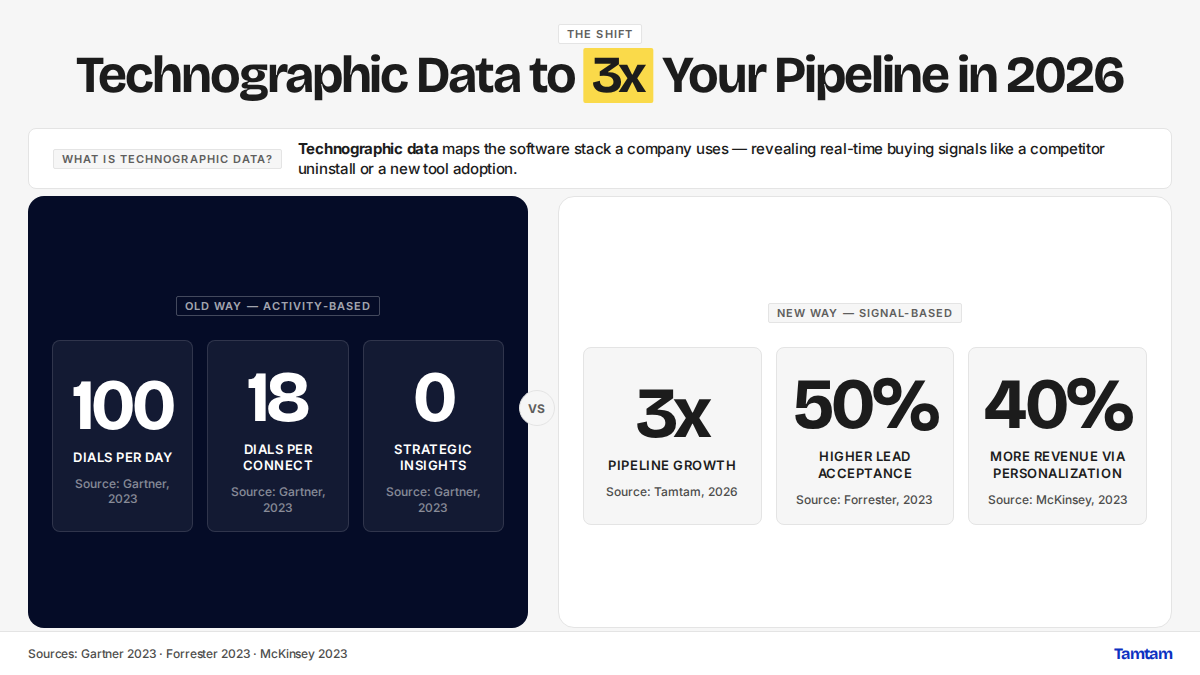
Firmographics describe what a company is and are relatively static. They are often used alongside other B2B data types to provide a more dynamic view of an account. Technographics, for example, detail the specific software and hardware a company uses, revealing its technology stack. Intent data and buying signals capture a company's online behavior, indicating active research into a product or problem. Combining these data types allows for more precise and timely prospecting.
Also known as: firmographic data, company attributes
See how Tamtam handles b2b data & enrichment in practice.
Learn more →