AI forecasting
AI forecasting uses machine learning models to analyze historical deal data and predict future sales revenue, offering a data-driven alternative to manual pipeline reviews.
AI forecasting is the process of using machine learning models to predict future sales revenue based on historical data. Unlike traditional sales forecasting, which relies heavily on the subjective judgment of individual sales reps and managers, AI forecasting generates a statistical projection of pipeline conversion. The goal is to produce a more objective and consistent revenue prediction by identifying patterns in past deal outcomes.
How AI Forecasting Works
An AI forecasting model is trained on a company's own historical sales data, a form of valuable first-party data stored in its CRM. The model analyzes thousands of data points from past opportunities, both won and lost, including deal size, deal velocity through sales stages, engagement activity levels, and company firmographics. Based on these patterns, it assigns a probability score to each open opportunity in the current pipeline. The accuracy of the model is highly dependent on strong data hygiene>, as incomplete or inconsistent CRM data will lead to unreliable predictions.
AI vs. Manual Forecasting
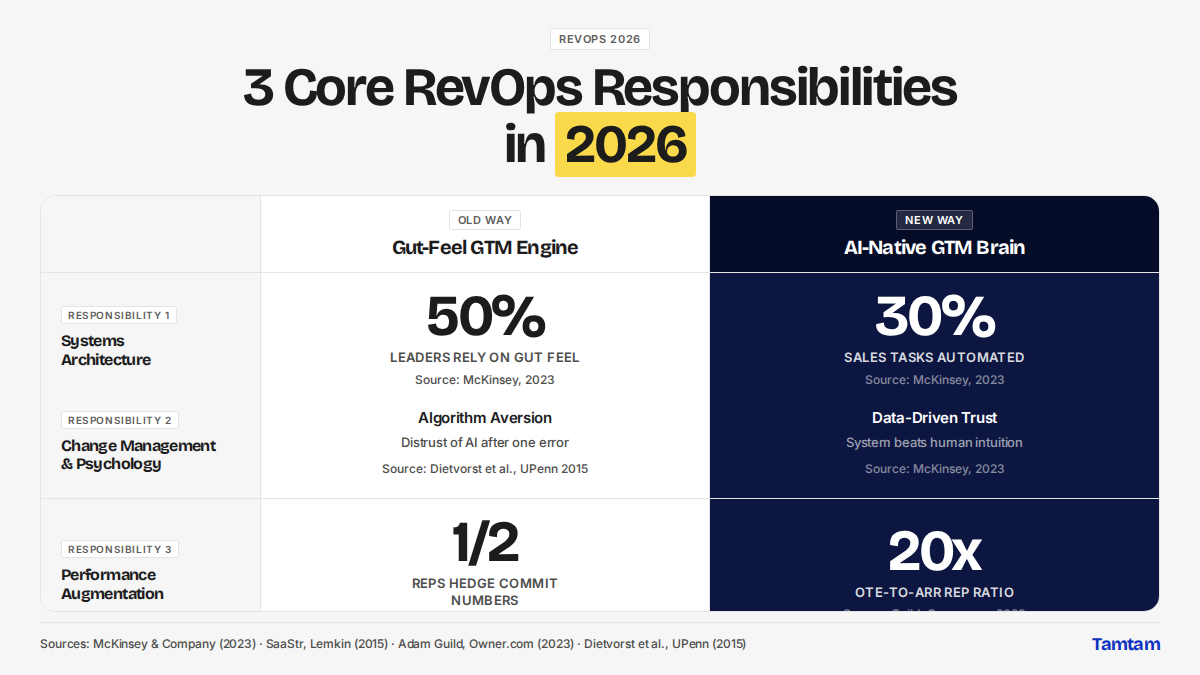
Manual forecasting requires sales leaders to collect and aggregate individual forecasts from each Account Executive. This process can be influenced by human biases, such as over-optimism or sandbagging. AI forecasting provides an objective baseline that can be used to validate or challenge the human-led forecast. Most organizations use AI as an augmentation layer, not a complete replacement. Sales management can compare the AI-generated number with the team's committed forecast to spot discrepancies, identify at-risk deals, and improve overall forecast accuracy.
Also known as: ML forecasting, predictive forecasting
See how Tamtam handles ai & vibe prospecting in practice.
Learn more →