Data hygiene
Data hygiene is the ongoing process of ensuring the accuracy, consistency, and completeness of data within a CRM or marketing automation system.
Data hygiene refers to the set of processes for maintaining the accuracy, completeness, and consistency of customer data over time. It is a continuous practice, not a one-time project, aimed at ensuring the data within a CRM or marketing automation platform remains a reliable asset for the entire revenue team. The goal is to create a single source of truth for all customer-facing activities.
Key Data Hygiene Processes
Common data hygiene tasks include:
- Deduplication: Finding and merging duplicate records for accounts, contacts, and leads to prevent fragmented views of a customer.
- Normalization: Standardizing data fields into a consistent format. This includes capitalizing names properly, using standard abbreviations for states or countries, and aligning job titles with a defined taxonomy.
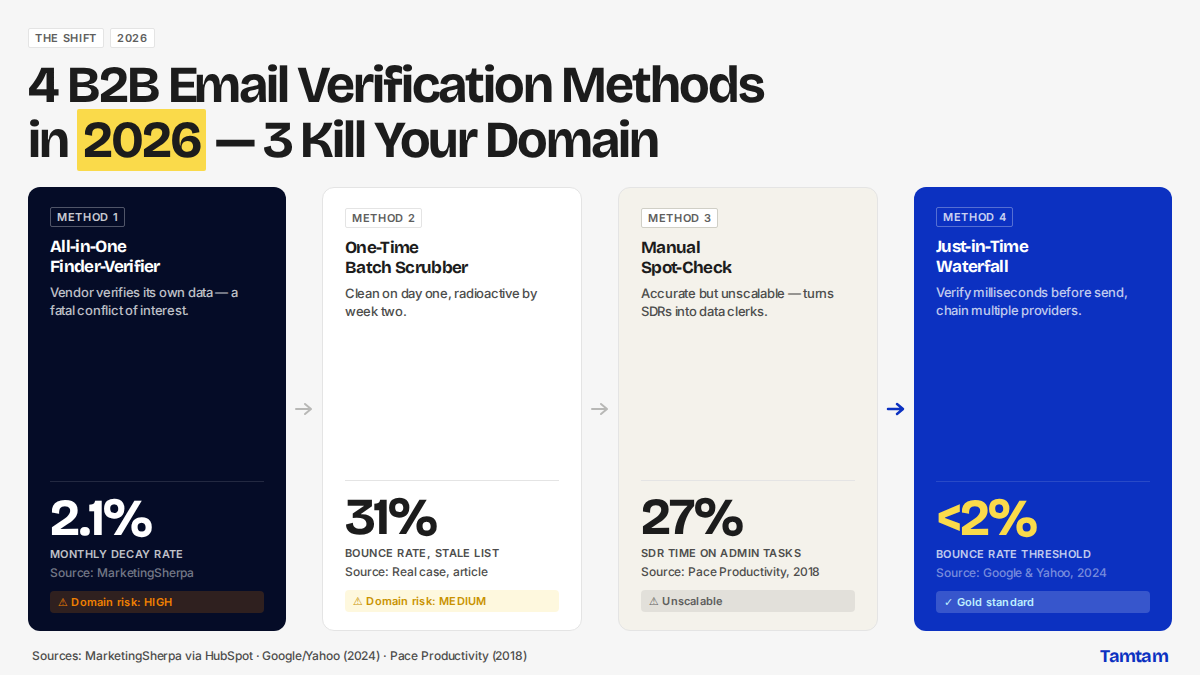
- Validation and Verification: Checking data points against external sources to confirm their accuracy, such as verifying that an email address is deliverable or a company is still in business.
- Decay Management: Proactively identifying and correcting outdated information, which is a necessary response to natural record decay as people change jobs and companies evolve.
Why Data Hygiene Matters
Clean data is the foundation of any effective go-to-market strategy. Without it, sales and marketing efforts suffer from bounced emails, calls to wrong numbers, and outreach sent to people who have left their roles. Accurate data enables precise segmentation, reliable lead scoring, and the effective identification of companies matching an Ideal Customer Profile. This discipline is typically owned by the Revenue Operations team, which implements the tools and processes to automate and enforce data quality standards.
The Consequences of Neglect
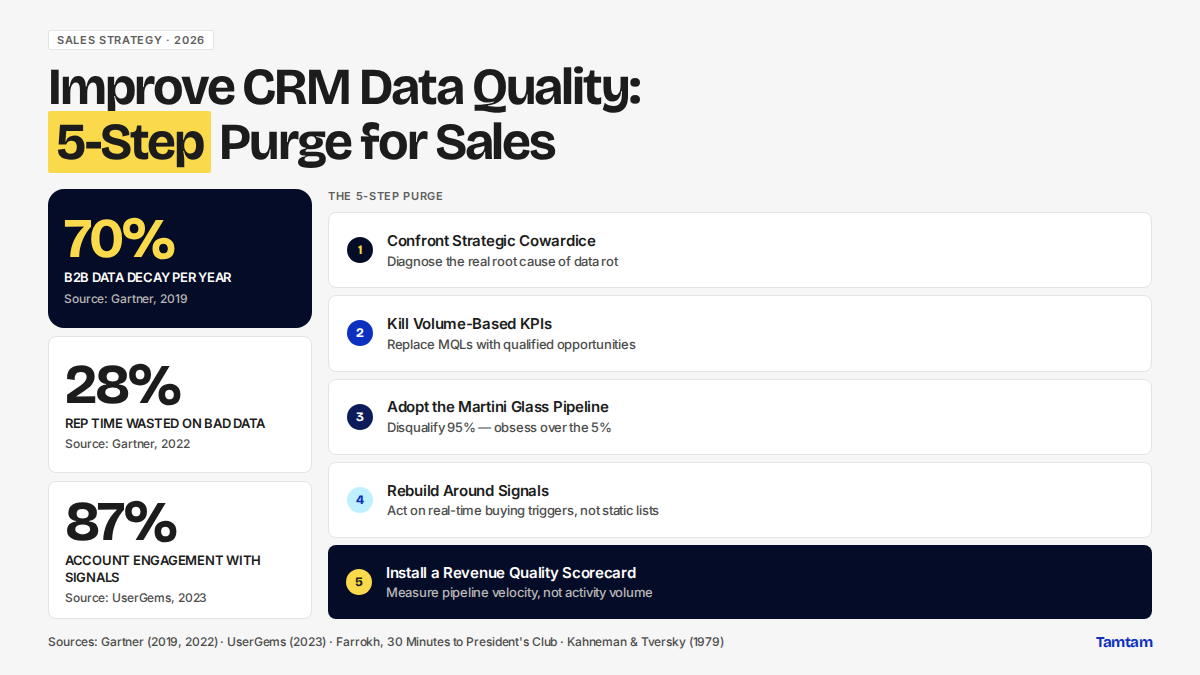
When neglected, B2B data degrades quickly. Industry estimates suggest that 20% to 30% of CRM data becomes obsolete each year. This erosion of quality directly impacts revenue performance by undermining forecasting accuracy, causing lead routing errors, and reducing the effectiveness of personalized campaigns like account-based marketing. Over time, poor data hygiene leads to a loss of trust in the CRM, causing user adoption to fall and making it difficult to generate reliable business insights.
Also known as: CRM hygiene, data cleanliness
See how Tamtam handles b2b data & enrichment in practice.
Learn more →