Record decay
Record decay is the natural rate at which contact and account information in a CRM becomes inaccurate as people change jobs and companies evolve.
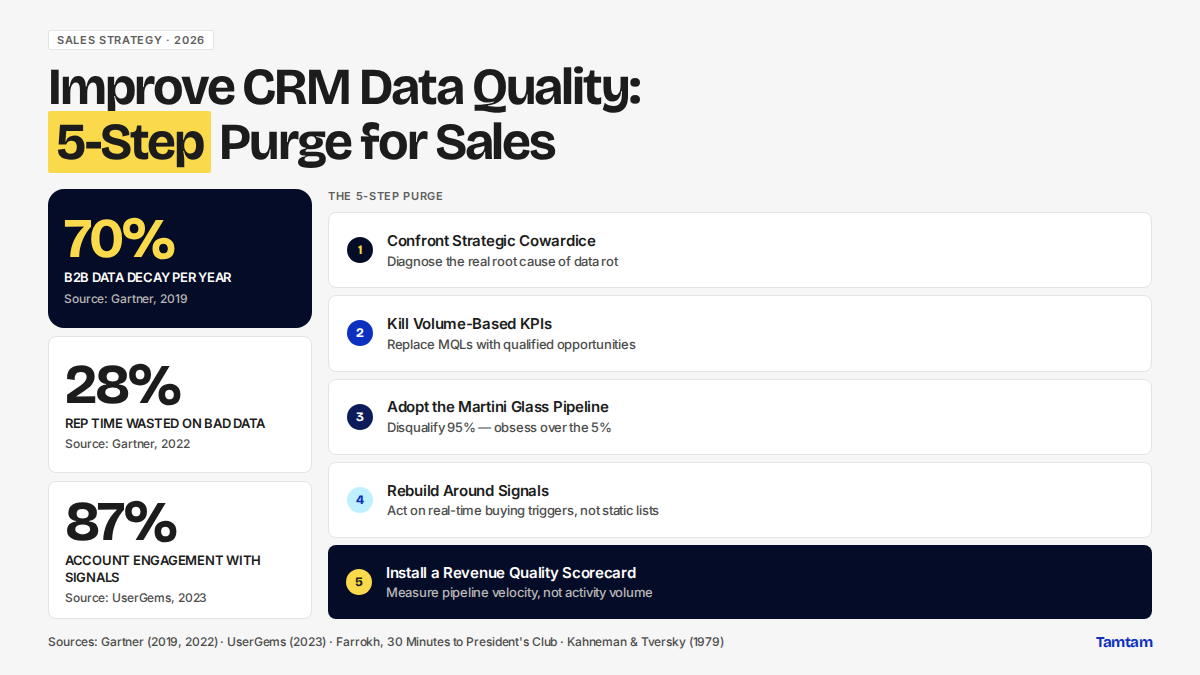
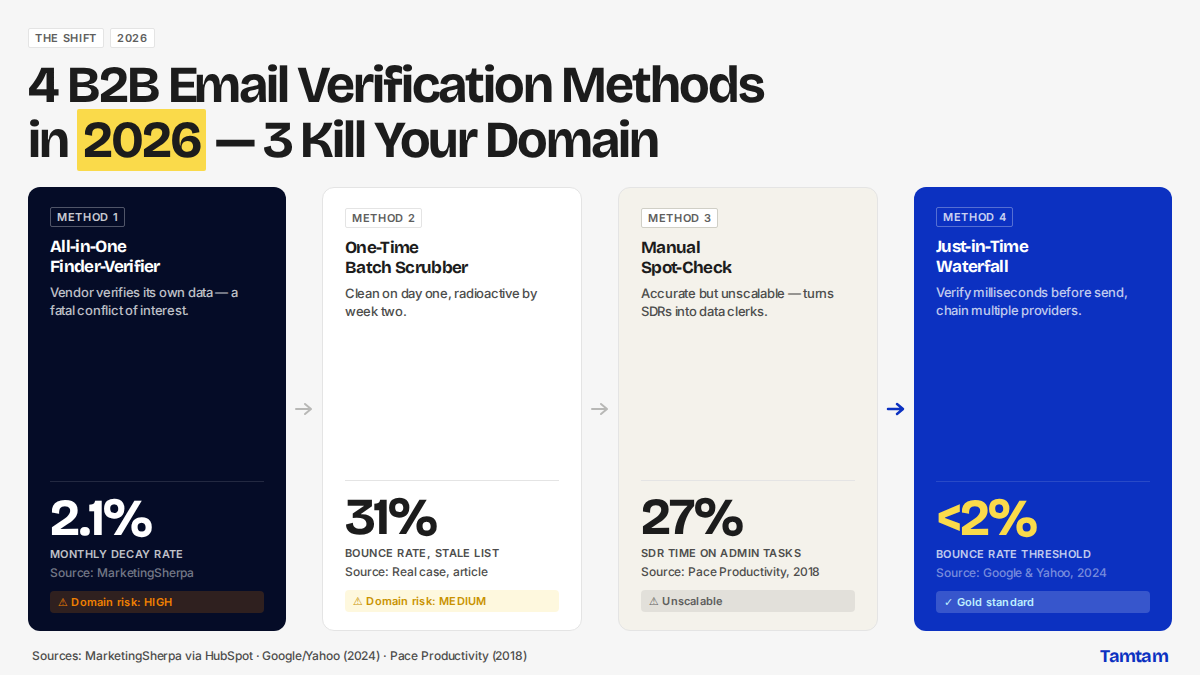
Record decay, also known as data decay, is the natural process by which information in a CRM or database becomes outdated and inaccurate over time. This erosion of data quality is an inevitable consequence of a dynamic business environment. A widely cited industry benchmark suggests B2B contact data decays at a rate of 2.5% per month, meaning nearly a third of a contact database can become obsolete in a single year.
What causes record decay?
Record decay is not a failure of initial data entry; it is an outcome of normal business events. The primary drivers include:
- Job changes: Employees switch companies, get promotions, or change roles, invalidating their old title and contact information.
- Company changes: Businesses are acquired, merge with others, rebrand, or go out of business, altering firmographic data.
- Contact detail changes: People get new email addresses or phone numbers.
- Location changes: Companies open new offices, close old ones, or relocate their headquarters.
Why record decay matters
Unchecked record decay directly impacts revenue generation and operational efficiency. Sales teams waste valuable time on outreach that bounces or targets the wrong person, hurting prospecting productivity and morale. Marketing campaigns suffer from poor deliverability and skewed analytics, leading to wasted budget. At a strategic level, decayed data undermines critical processes like territory planning, market segmentation, and defining an Ideal Customer Profile. It erodes trust in the CRM as a reliable source of truth.
How to manage record decay
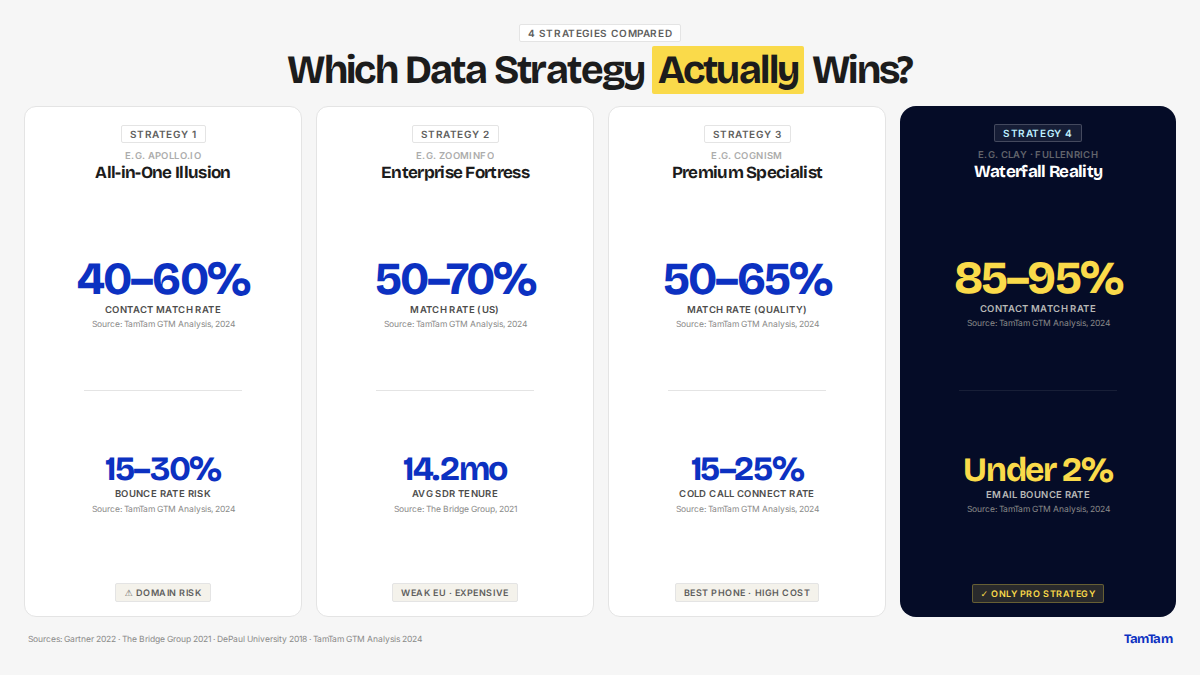
Combating record decay requires a proactive approach to data hygiene, a discipline typically managed by a Revenue Operations team. Instead of performing infrequent, manual data cleanup projects, leading organizations implement continuous data maintenance. This often involves using automated contact enrichment and account enrichment services that use third-party data to refresh and validate records, preserving the value of the database as a strategic asset.
Also known as: data decay, CRM decay, contact decay
See how Tamtam handles b2b data & enrichment in practice.
Learn more →