Third-party data
Third-party data is information collected by an external entity and purchased by a company to supplement its own customer and market insights.
Third-party data is information acquired from external sources rather than collected directly from a company's own audience or customers. Data providers aggregate this information from a wide variety of public and private sources, then sell or license it to other businesses for sales, marketing, and research purposes. It provides a broad view of the market, helping teams understand potential customers they have not yet engaged.
This type of data is distinct from first-party data (collected from direct interactions) and zero-party data (shared proactively by the user).
Common Types in B2B Sales
Go-to-market teams use several categories of third-party data to build a comprehensive view of their target accounts.
- Firmographics: Core company attributes like industry, employee count, location, and annual revenue.
- Technographics: Information about the software, hardware, and other technologies a company uses.
- Intent data: Behavioral signals suggesting a company is actively researching a particular product or service category.
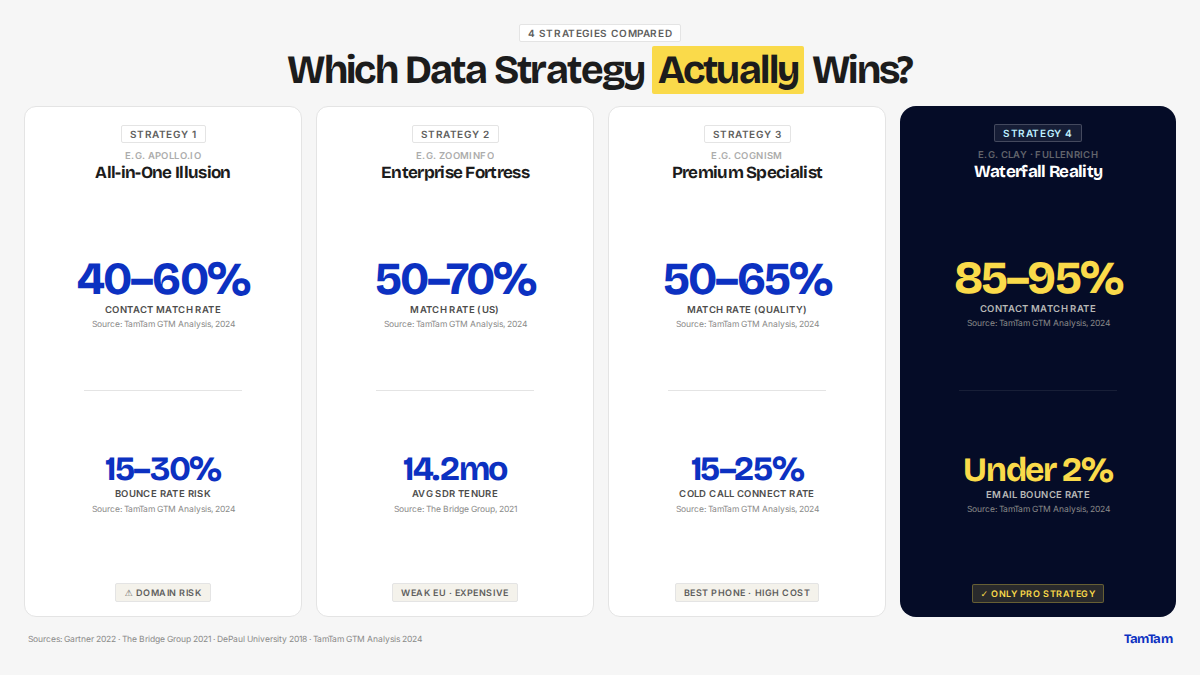
- Contact Data: Verified contact details for decision-makers, such as email addresses, direct phone numbers, and professional social network profiles.
How Third-Party Data is Used
Third-party data is a critical component of modern sales and marketing operations. Its primary use case is account enrichment, where it augments or corrects incomplete records within a CRM. By enriching existing data, teams can improve market segmentation, score leads more accurately, and personalize outreach.
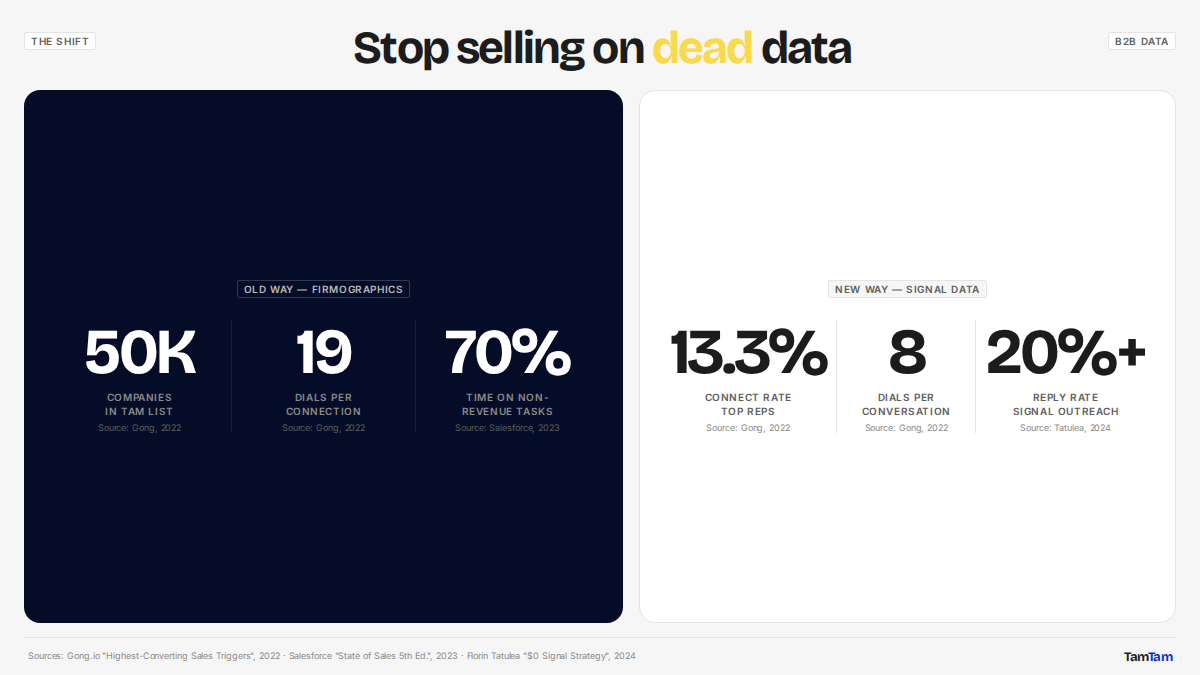
It is also fundamental to prospecting. Sales teams use third-party datasets to build a target account list of companies that match their Ideal Customer Profile but are not yet in their system.
Key Considerations
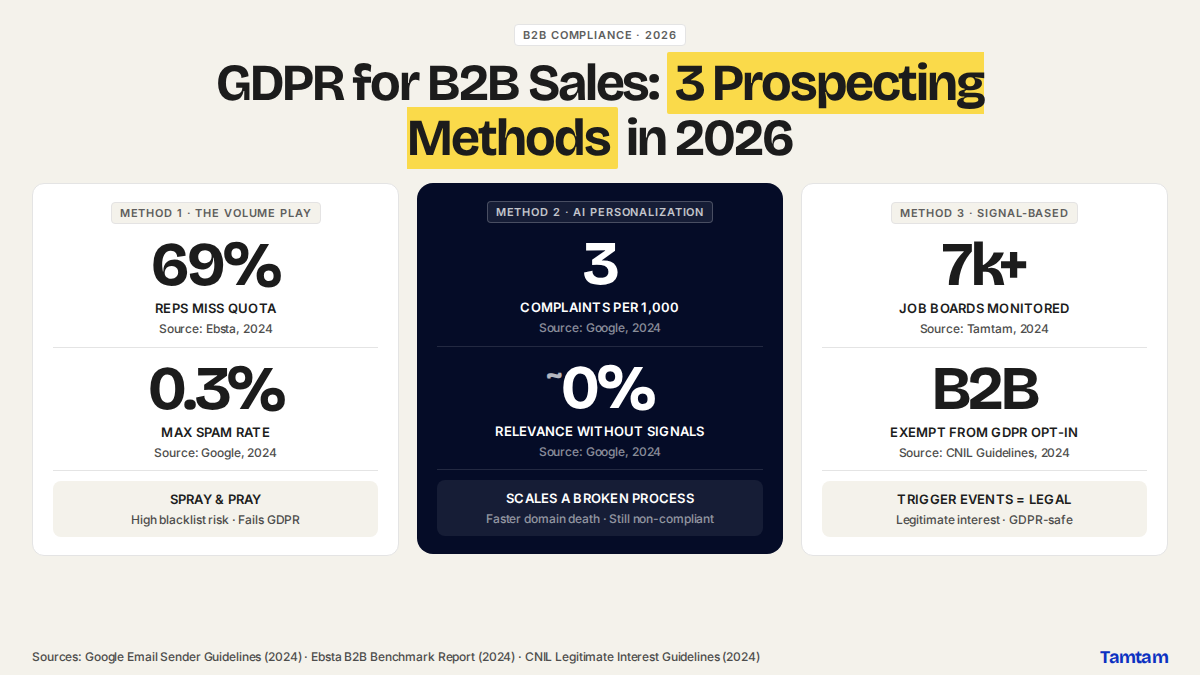
While powerful, third-party data has limitations. Its accuracy can vary, and it is subject to record decay as people change jobs and companies evolve. Organizations must also ensure their use of third-party data complies with privacy regulations like GDPR and CCPA. Because it is not collected directly, its provenance is not always clear, which can pose a higher compliance risk than first-party or zero-party data.
Also known as: third party data, external data
See how Tamtam handles b2b data & enrichment in practice.
Learn more →