Sales intelligence
Sales intelligence combines technology and third-party data to help revenue teams find, prioritize, and engage their best-fit potential customers.
Sales intelligence is the use of technology and third-party data to help B2B sales teams make more informed decisions. Its primary purpose is to provide reps and leaders with the information needed to find the right accounts, understand their business context, and engage them at the optimal time. These platforms consolidate vast amounts of company and contact data, serving as a system of record for the addressable market, distinct from a CRM which tracks direct customer interactions.
Key Data Types
Sales intelligence platforms aggregate several layers of data to create a comprehensive view of a market. The most common data types include:
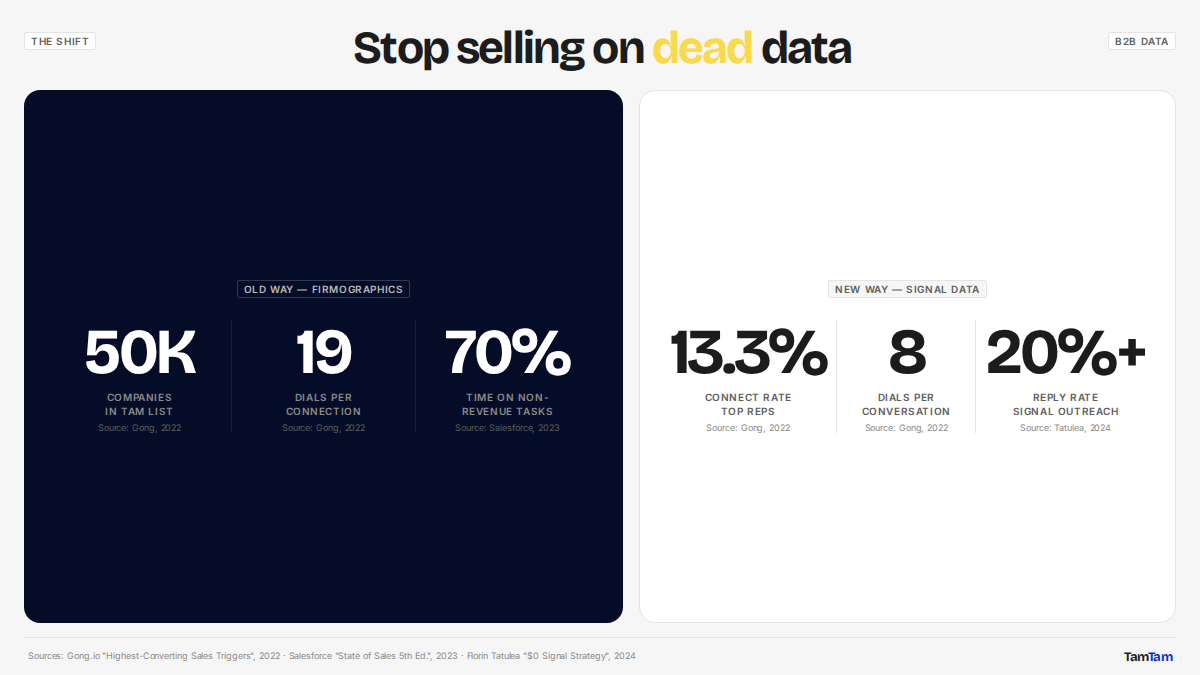
- Firmographics: Foundational company attributes like industry, revenue, employee count, and location. This data helps define an Ideal Customer Profile (ICP).
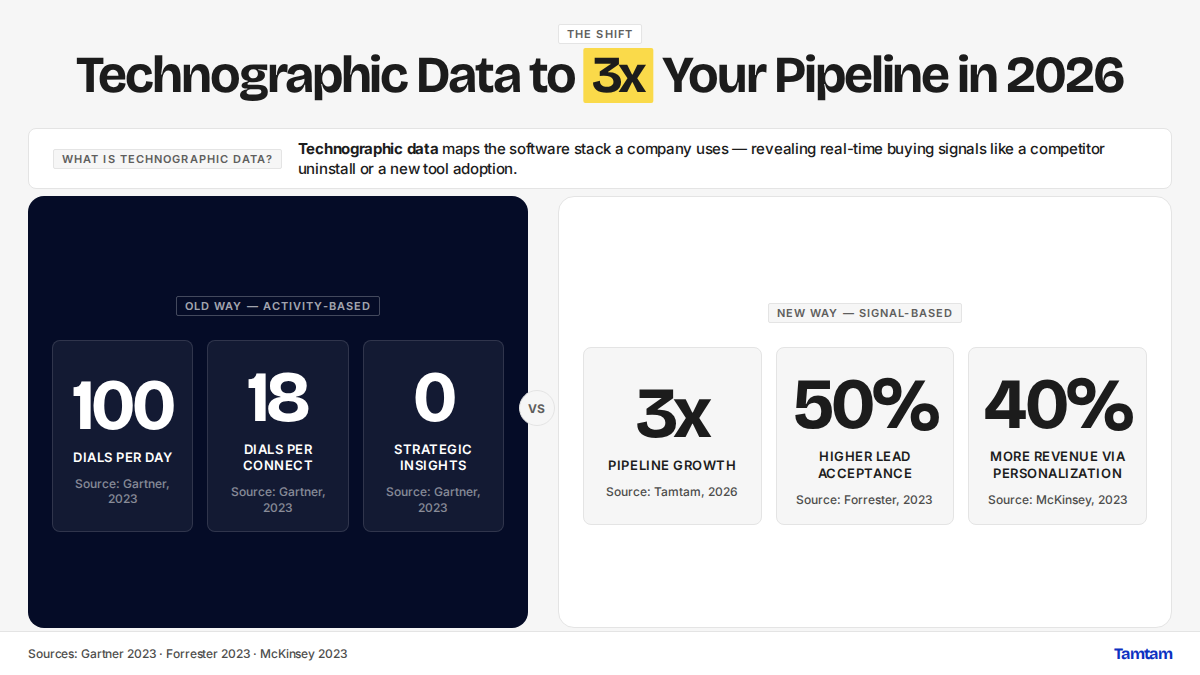
- Technographics: Information about a company's existing technology stack, revealing potential integration opportunities or competitive vulnerabilities.
- Intent Data: Behavioral signals indicating that a company is actively researching a product category online.
- Buying Signals: Real-time events, such as a funding announcement or a key executive hire, that suggest a buying window is open.
Core Applications in Sales
Revenue teams use sales intelligence to drive efficiency and effectiveness across the sales cycle. Common applications include building a high-quality prospect list, prioritizing accounts for outbound sales, and enabling deep account research for personalization. By understanding an account's structure and recent activities, reps can tailor their outreach and more effectively navigate the buying committee.
Sales Intelligence vs. CRM
While often integrated, sales intelligence platforms and CRMs serve different functions. A CRM is a system for managing a company's own relationships and interaction history with prospects and customers. In contrast, a sales intelligence platform provides external market data about companies that a sales team may not yet have a relationship with. The data from a sales intelligence tool is frequently used for account enrichment within the CRM, keeping internal records accurate and complete.
Also known as: sales intelligence platform, B2B intelligence
See how Tamtam handles b2b data & enrichment in practice.
Learn more →