Territory planning
Territory planning is the strategic process of dividing a total market into manageable segments and assigning them to specific sales reps or teams.
Territory planning is the annual process where sales leadership divides the company's total market into distinct segments, called territories, and assigns them to individual sellers or teams. The primary goal is to distribute sales opportunities and revenue targets fairly, ensuring every representative has a viable path to achieving their quota. This structured approach prevents account conflicts between reps and helps the organization achieve full market coverage.
Common Models for Territory Design
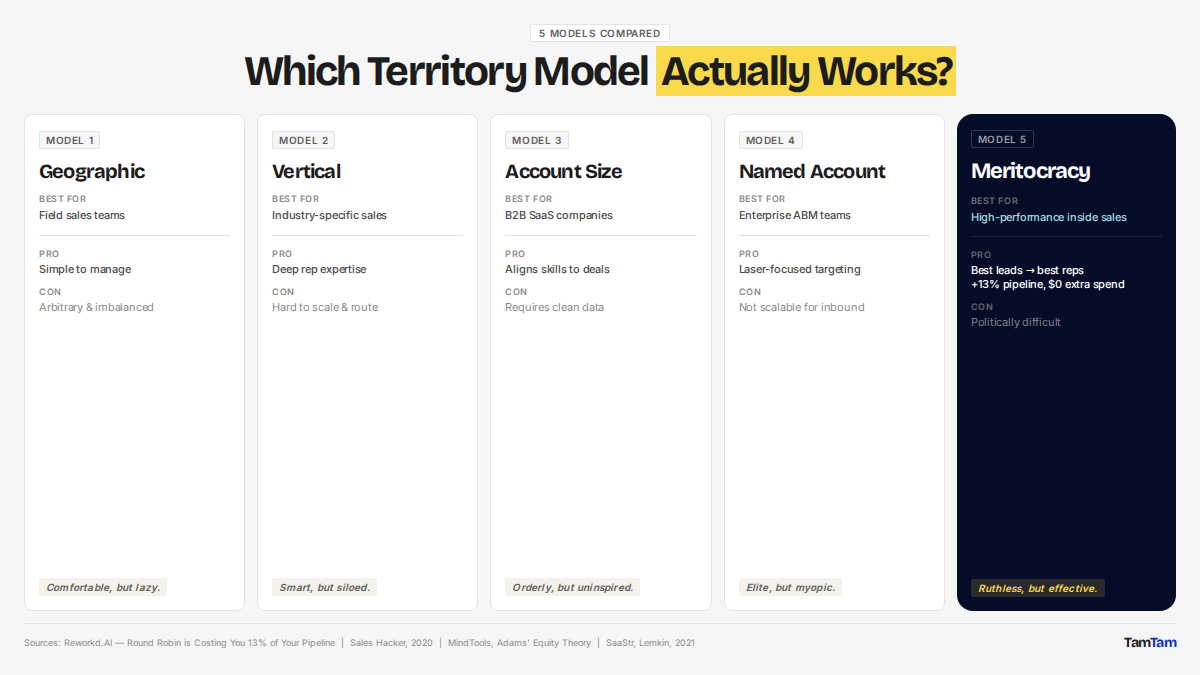
Territories are designed to create balanced patches that align with a company's go-to-market strategy. While geographic boundaries are the traditional method, modern B2B sales organizations use a variety of criteria, often in combination:
- Industry Vertical: Assigning reps to specialize in specific sectors like manufacturing or financial services.
- Company Size: Using firmographics to create segments like SMB, Mid-Market, and Enterprise.
- Named Accounts: A list of high-value strategic accounts assigned to a specific account executive or team.
- Product Line: For companies with multiple offerings, territories may be based on the product a rep sells.
The Role of Planning in Sales Operations
Effective territory planning is a cornerstone of an efficient sales organization. It provides a logical foundation for assigning a fair quota to each rep, which directly impacts motivation and performance. The process, typically managed by Sales Operations, ensures that the company’s sales capacity is aligned with market opportunity. By clearly defining ownership, it also reduces internal friction and allows for more effective account prioritization, helping reps focus their energy where it matters most.
Also known as: sales territory planning, territory design