Objection handling
Objection handling is the sales practice of acknowledging, understanding, and resolving a buyer's concerns to advance a deal.
Objection handling is a set of techniques used by sales professionals to respond to and resolve concerns raised by a potential customer. Rather than a confrontational debate, effective objection handling is a collaborative process of uncovering the root cause of a buyer's hesitation. The goal is not to "win" an argument but to address the underlying issue, build trust, and move the conversation forward in the sales cycle.
Objections typically surface during prospecting calls, a discovery call, or later-stage negotiations. They are a natural part of the buying process and often signal that the buyer is engaged but needs more information or reassurance.
Common Types of Objections
While specific concerns vary, most fall into a few key categories. A well-prepared sales team can anticipate and develop strategies for each type.
- Price/Budget: The buyer perceives the solution as too expensive or outside their allocated budget.
- Need/Fit: The prospect does not believe they have the problem the solution solves or that the product is a good fit for their specific situation.
- Timing: The buyer agrees with the value but states that now is not the right time to purchase, often due to competing priorities.
- Trust/Risk: The prospect is unfamiliar with the vendor's company or is concerned about the risks of implementation and change management.
- Competitor: The buyer is already working with a competitor or is evaluating them as a preferred alternative.
Modern Approach to Resolution
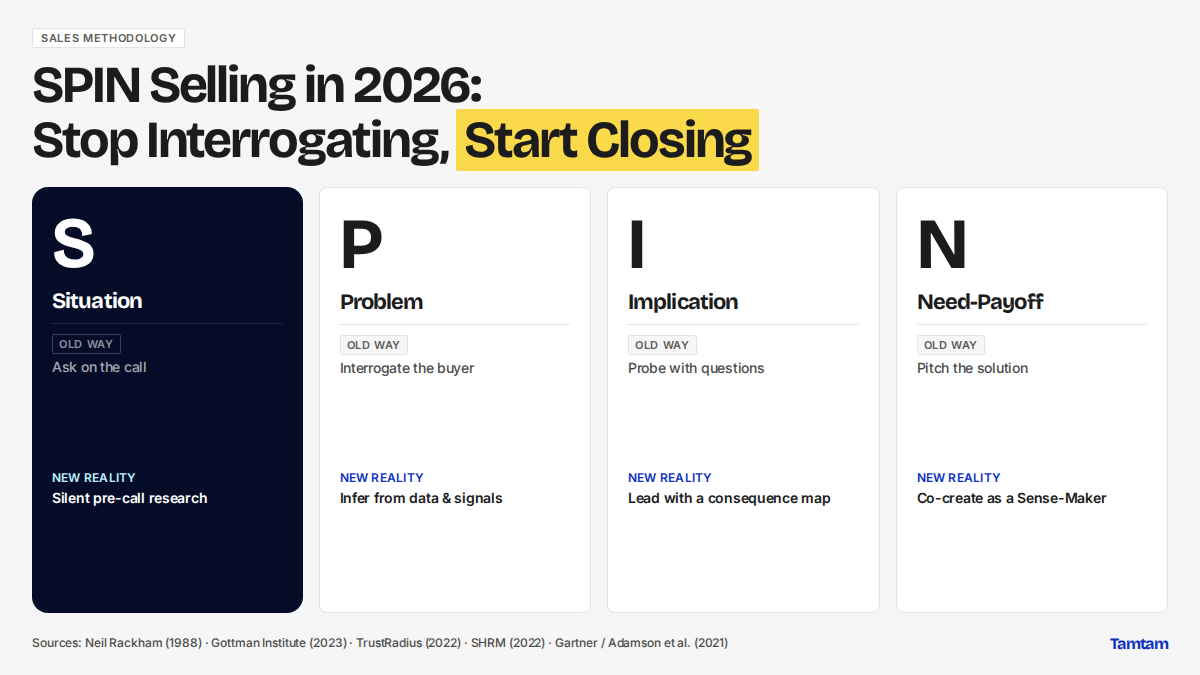
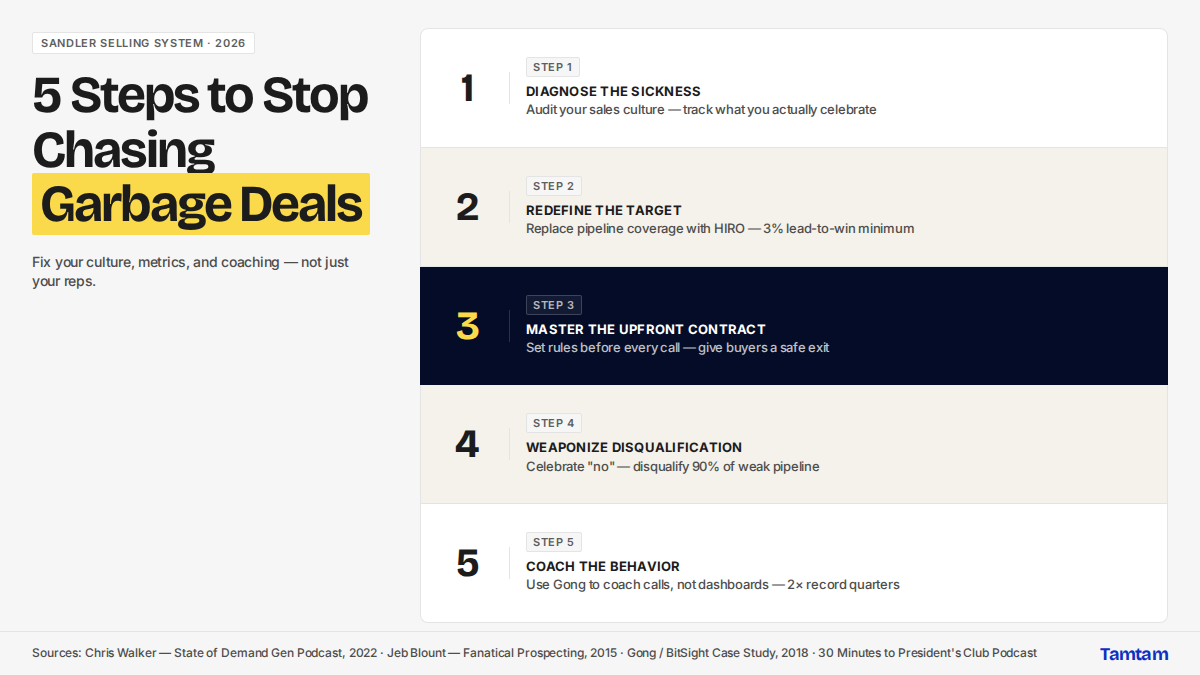
Modern sales methodologies treat objections as requests for more information. Instead of delivering a prepared rebuttal, reps use questioning techniques to understand the context behind the concern. Frameworks like the Sandler Selling System and SPIN Selling train reps to explore the objection's impact and reframe the conversation around a solution's potential value.
This consultative approach helps clarify misunderstandings, validates the buyer's concerns, and repositions the discussion around outcomes. By focusing on value selling, a rep can often show that the cost of inaction is greater than the price of the solution, resolving the objection through mutual understanding.
Also known as: sales objections
See how Tamtam handles outbound & pipeline generation in practice.
Learn more →